← All Industries
Printing
Printing & Press Chillers
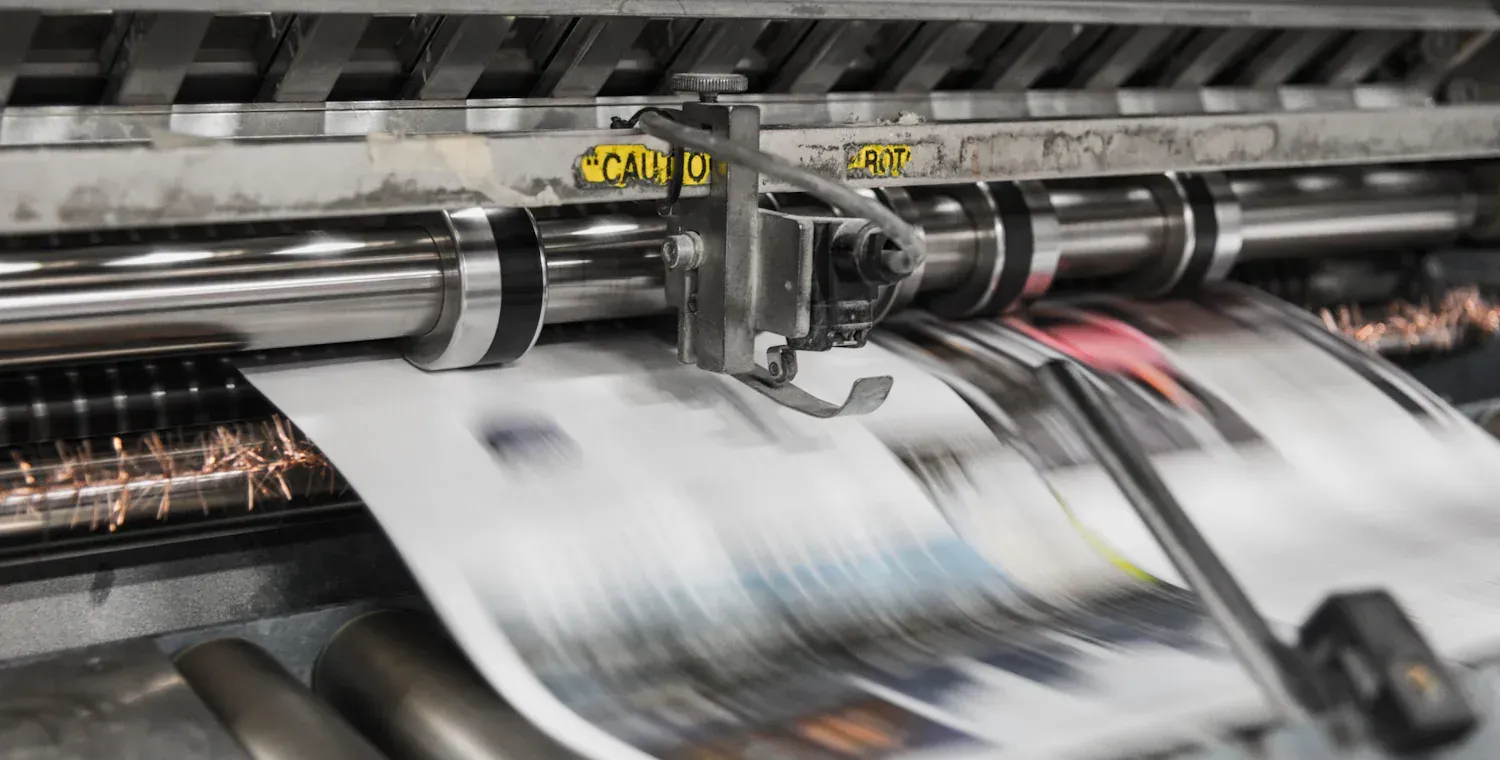
Ink temperature control, UV curing roller cooling, and press drum cooling for high-speed web offset and digital printing presses.
View Recommended Chillers
Ink temperature control, UV curing roller cooling, and press drum cooling for high-speed web offset and digital printing presses.
View Recommended ChillersHigh-speed presses generate intense heat from friction, UV curing lamps, and ink viscosity changes. The chiller holds ink temperature at a constant 22–28°C — critical for viscosity, color consistency, dot gain control, and paper feed precision. UV curing rollers and LED arrays generate 50–100 kW during peak production.
Temperature drift causes color shift, ink bleeding, and web misregistration that demand expensive rework or reprints. On a long run, the chiller is what keeps every impression matching the first.
Common process cooling problems in Printing and why getting the chiller right matters.
Presses switch ink every 30–60 minutes while UV lamps ramp to full power, creating 200+ kW transient spikes. A chiller that overshoots setpoint drops ink viscosity and ruins the next few thousand prints.
Printing uses specialty coolants tuned for color stability, and cleaning cycles inject corrosive solvent into the lines. Chiller seals and finishes must resist solvent attack that degrades standard stainless.
A compact 8-color press needs 150+ GPM in under 2 m². Oversized external chillers force expensive plumbing and remote installation; an integrated design fits the press architecture.
Our chillers integrate directly with the process equipment that Printing relies on. These are the systems we most often cool — each with its own temperature target, flow, and failure mode we size for.
The chiller stabilizes roller and fountain-solution temperature.
The chiller cools drums and drying to control register and ink.
The chiller holds imaging and fusing electronics at temperature.
The chiller rejects lamp heat to protect substrate and optics.
Chiller systems most commonly matched to Printing applications.
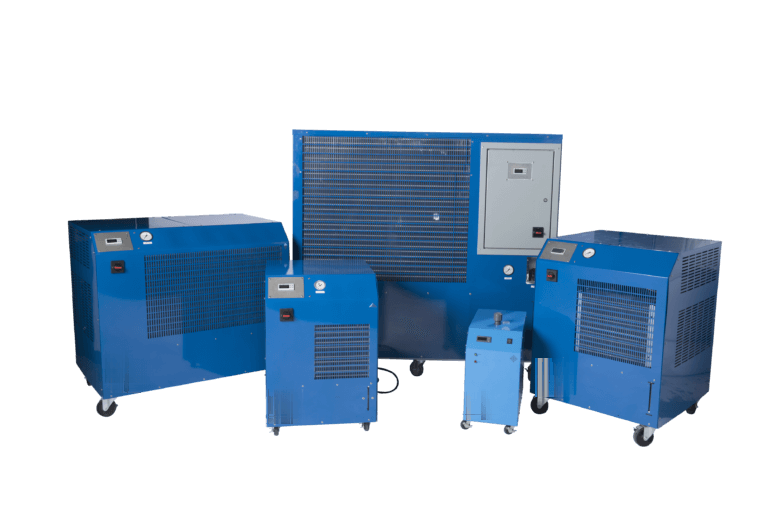
Standard Series
40°F / 4°C
1/3-40 Ton
Stable ink and roller temperature control for offset and digital presses, with fast response to color-change transients.
Get a Quote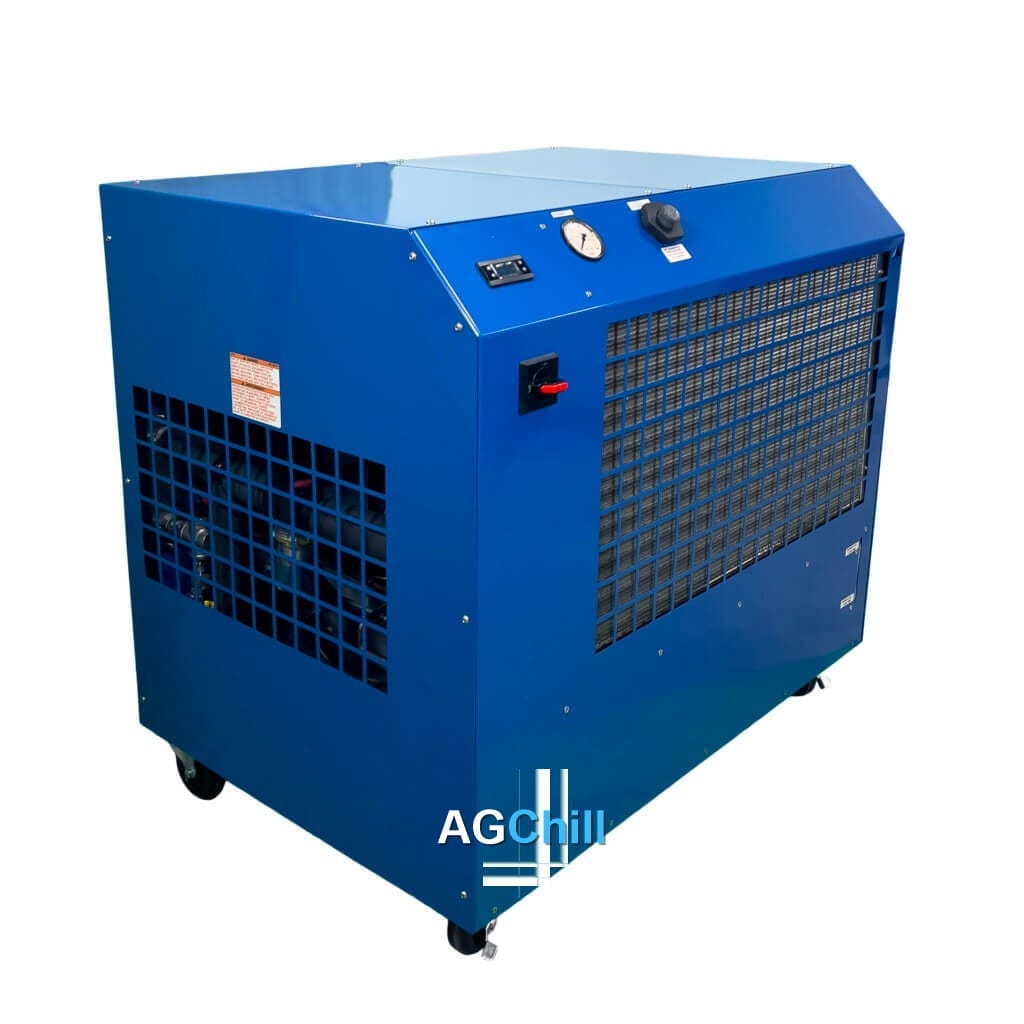
Portable Chiller
50°F / 10°C
1-15 Ton
Dedicated point-of-use cooling for individual presses or UV curing stations, easy to install and relocate.
Get a QuoteCentral Chiller
45°F / 7°C
10-50 Ton
Centralized cooling for multi-press print floors handling simultaneous ink and curing loads.
Get a QuoteOn a press, a chiller problem turns into rejected waste at production speed.
Chiller failure during a 10-million-piece run causes ink temperature to spike; color separations shift out of tolerance, generating rejected waste equal to 5–10% of the run ($50K–200K). The press must shut down, cool, and reprint — delaying delivery 5–7 days and triggering contractual penalties. Extended UV roller overheating degrades lamp life and optical coatings, forcing $30K–80K equipment replacement ahead of schedule.
5–10%
Run rejected as waste when ink temperature drifts
$200K
Waste cost on a single large production run
5–7 days
Delivery delay from a mid-run chiller failure
Whether you're researching options or ready to order, AG Chill can help.
Print production managers and press operators researching UV print cooling, offset press temperature control, and ink viscosity management.
Maintenance managers evaluating replacement or upgrade for an aging press cooling system — needs press-model compatibility, performance data, and local service.
Plant operations directors budgeting for a new press or retrofit. Need press-integration proof, an uptime warranty, and installation and commissioning included.
Print cooling is split between proprietary press-OEM systems and undersized generic units. AG Chill is print-specific and independent.
Press OEMs integrate cooling into the press but with proprietary design, expensive spares, and dealer-only service. AG Chill captures the retrofit and independent print-shop segment.
Generic industrial chiller suppliers are affordable and available but not optimized for ink/solvent compatibility, and frequently undersized for press pressure and flow. AG Chill’s print-specific design outperforms.
Specialty print-equipment suppliers service divisions know print but tie cooling to specific brands and bundle it with other services. AG Chill is standalone and press-agnostic.
The press-upgrade aftermarket is full of units with uncertain history, no warranty, and parts-obsolescence risk. AG Chill’s reliability prevents costly press downtime.
Buying guides and technical resources for Printing process cooling.
Buying Guide
How chilled rollers hold register, ink behavior, and substrate stability.
Read the Guide ›Sizing Guide
Heat load, flow rate, temperature differential, and ambient — how each one drives the size you actually need.
Read the Guide ›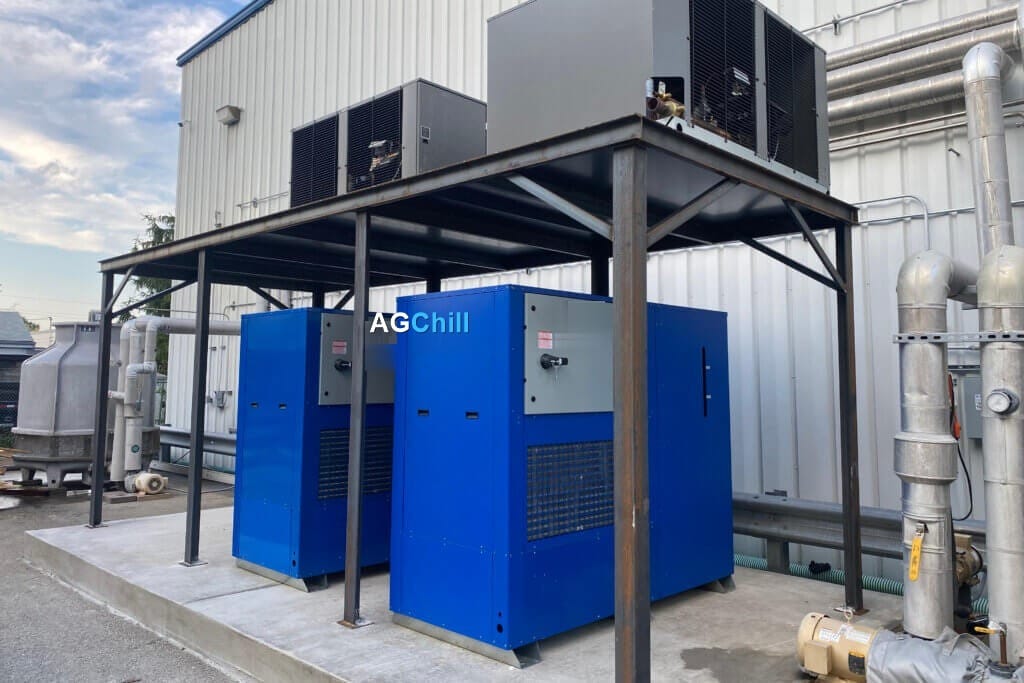
Selection Guide
Installation, operating cost, maintenance, and application fit — which setup makes sense for your facility.
Read the Guide ›Real-world results from Printing customers.
We are actively documenting customer results from Printing installations. These will be published here as case studies are completed. Have a project to discuss? We are happy to talk through your application.
Discuss Your ApplicationTell us your target temperature, flow rate, and heat load. AG Chill will identify the right system for your Printing application.
They control ink temperature, cool lasers and UV-curing rollers, and cool press drums for consistent registration and color.
Ink viscosity and registration shift, causing color and quality defects and web problems.