Pharmaceutical & Biotech Chillers
← All Industries Life Sciences

Pharmaceutical & Biotech Chillers

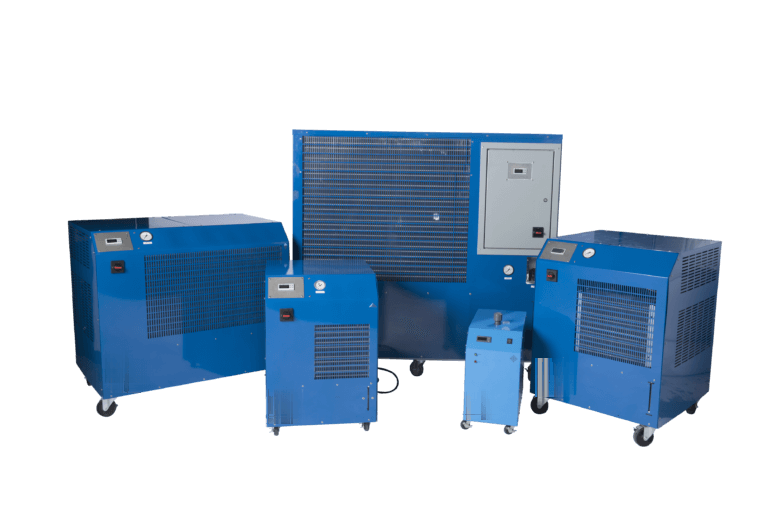
Pharmaceutical reactor cooling and precision process cooling equipment for API manufacturing, biotech research, lyophilization, and FDA-regulated laboratory applications — including ultra-low temperature chillers down to −80°C.

View Recommended Chillers
Why Chillers Matter

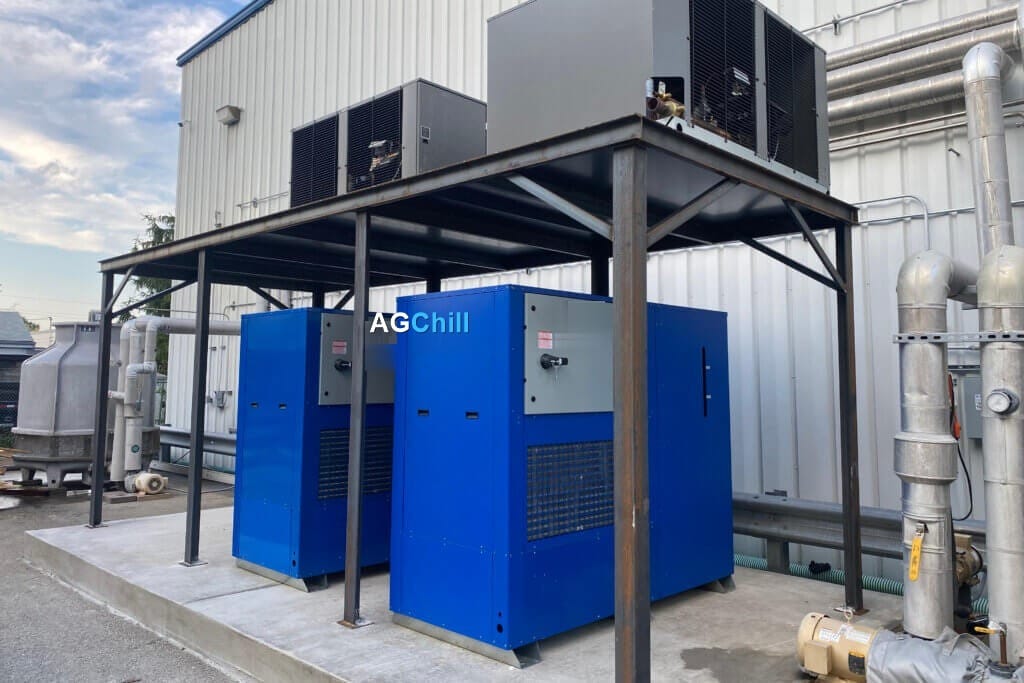
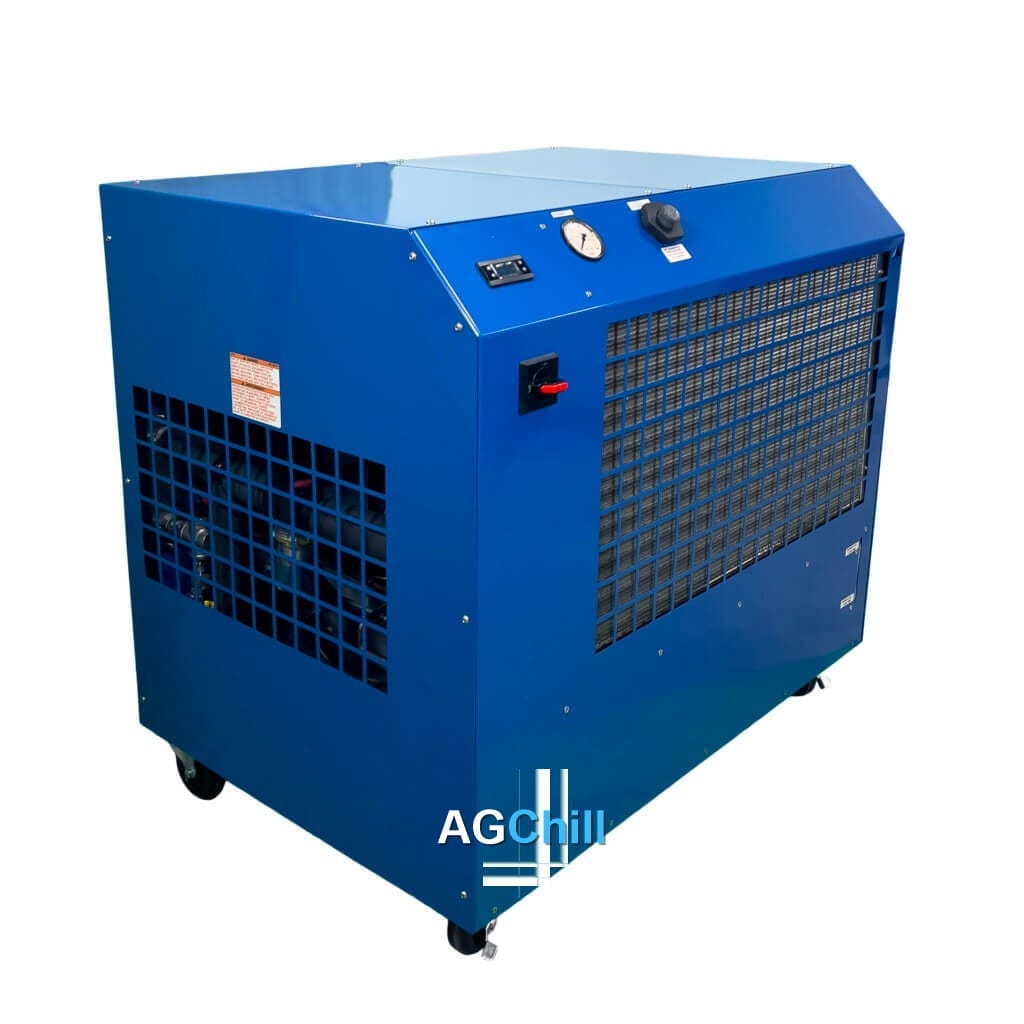
The Chiller's Role in Pharmaceutical Manufacturing

Pharmaceutical manufacturing relies on precise temperature control at every stage — from API synthesis and bioreactor fermentation to crystallization and lyophilization. Reactors and jacketed vessels must hold tight setpoints, often within ±0.5°C, because temperature directly controls reaction rate, product yield, and purity. In biopharmaceuticals, even a 2–3°C drift in a fermenter can kill the cell culture or shift the fermentation pathway, invalidating an entire 72-hour campaign.

In chemical synthesis, a temperature overshoot can trigger an exotherm that forces an emergency batch dump. GMP regulations require documented temperature control throughout the manufacturing process — the chiller is not support infrastructure, it is a primary process variable that determines whether the batch passes or fails.

Process Cooling

The Cooling Challenge

Common process cooling problems in Life Sciences and why getting the chiller right matters.

Strict Temperature Tolerances

Many pharmaceutical processes require stability within +/-0.5C. Standard HVAC chillers rarely achieve the stability required for formulation, reaction chemistry, or cold storage.

FDA & GMP Compliance

Process cooling equipment in pharma environments must support equipment qualification, validation documentation, and audit trails. Equipment selection directly affects compliance posture.

Fluid and Material Compatibility

Fluid selection, wetted material compatibility, and system design all affect batch integrity. The wrong chiller configuration can introduce contamination risk that standard industrial chillers don't account for.

What's at Stake

What Happens When the Chiller Fails

Pharmaceutical manufacturing leaves no room for temperature excursions.

A chiller malfunction during a 72-hour bioreactor fermentation or multi-ton API synthesis run can result in total batch loss. If the reactor overshoots temperature by 5°C, the cell culture dies or the reaction goes exothermic and must be dumped for safety. A failed batch of API worth $200K–$1M+ is destroyed with no recovery. Regulatory agencies require a full investigation; if the root cause is linked to a preventable equipment failure, the facility faces audit findings and potential manufacturing suspension. Downstream customers see shipment delays, clinical trials stall, and in contract manufacturing, the facility carries direct financial liability to the pharma client.

$200K+

Typical API batch value at risk

±0.5°C

Maximum allowable temperature drift in GMP processes

72 hrs

Typical bioreactor run — one failure ruins the entire campaign

Where the Chiller Connects

Equipment We Cool in Pharmaceutical & Biotech

Our chillers integrate directly with the process equipment that Pharmaceutical and Biotech relies on. These are the systems we most often cool — each with its own temperature target, flow, and failure mode we size for.

Jacketed reactors

The chiller removes reaction heat and hold crystallization temperatures.

Lyophilizers (freeze dryers)

The chiller supplies the condenser cooling that captures sublimed vapor.

Bioreactors & fermenters

The chiller holds culture temperature for yield and viability.

Rotary evaporators & distillation

The chiller condenses solvent for recovery and concentration.

Stability & environmental chambers

The chiller drives the cold side of ICH stability testing.

Chiller Selection

Recommended Chillers

Chiller systems most commonly matched to Life Sciences applications.

ULT Series

ULT Series

-112°F / -80°C

1/2-20 Ton

Cascade refrigeration systems for ultra-low temperature pharmaceutical processes, cold storage support, and reaction chemistry where ultracold fluid is critical.

Get a Quote
ELT Series

ELT Series

-22°F / -30°C

2-20 Ton

Extra-low temperature systems for pharmaceutical manufacturing where sub-zero fluid temperatures are required for consistent process temperature control.

Get a Quote
Custom Pharma Package

Custom Pharma Package

Configurable

Application-Specific

Integrated pump skid, buffer tank, controls, and filtration configured for pharmaceutical environments with documentation support for equipment qualification.

Get a Quote
Why AG Chill

How We Compare to the Alternatives

Most pharmaceutical facilities end up with a general industrial chiller configured after the fact. AG Chill starts from the application.

GMP Documentation Included

Most industrial chiller suppliers provide equipment — not validation documentation. AG Chill's pharmaceutical configurations come with the IQ/OQ/PQ support documentation pharma facilities need for equipment qualification and FDA audits.

USA Manufacturing — Fast Service

Premium European precision brands offer excellent accuracy but come with long lead times and limited US service infrastructure. AG Chill is manufactured in Salt Lake City — faster delivery, faster service, and no import logistics.

Standalone vs Bundled OEM Pricing

Bioreactor OEMs bundle proprietary chillers into their systems at premium prices. AG Chill provides the same cascade and precision capability as a standalone system — without the locked-in pricing or restricted serviceability.

Engineering Consultation, Not a Catalog

General industrial distributors spec pharmaceutical chillers from a catalog based on tonnage alone. AG Chill evaluates your reactor size, process temperature, fluid compatibility, and documentation requirements before recommending a configuration.

Knowledge Base

Related Articles

Buying guides and technical resources for Life Sciences process cooling.

Pharmaceutical Reactor Cooling Requirements

Pharmaceutical Reactor Cooling Requirements

Why ±0.5°C stability matters, GMP documentation, fluid compatibility, and series matching.

Read the Guide ›
How to Size an Industrial Chiller

How to Size an Industrial Chiller

Heat load, flow rate, temperature differential, and ambient — how each one drives the size you actually need.

Read the Guide ›
Air-Cooled vs Water-Cooled Chillers

Air-Cooled vs Water-Cooled Chillers

Installation, operating cost, maintenance, and application fit — which setup makes sense for your facility.

Read the Guide ›
Customer Results

Case Studies

Real-world results from Life Sciences customers.

Case Studies Coming Soon

We are actively documenting customer results from Life Sciences installations. These will be published here as case studies are completed. Have a project to discuss? We are happy to talk through your application.

Discuss Your Application
Who This Is For

We Work With All Stages of the Buying Process

Whether you're researching options or ready to order, AG Chill can help.

Researching Options

Process engineers and equipment specialists evaluating pharmaceutical reactor cooling requirements for a new or upgraded facility. Typically searching for GMP chiller specs, temperature stability data, and compliance documentation.

Comparing Systems

Manufacturing managers evaluating chiller suppliers for an API facility or contract manufacturer. Focused on GMP compliance, ±0.5°C stability, validation packages, and integration with existing jacketed reactor setups.

Ready to Specify

Plant directors and VP-level operations leaders at licensed pharmaceutical manufacturers. Need proven pharma references, a complete validation package, extended warranty, and 24/7 emergency support with a guaranteed response SLA.

Get Started

Ready to Spec the Right Chiller?

Tell us your target temperature, flow rate, and heat load. AG Chill will identify the right system for your Life Sciences application.

Start Chiller SelectorTalk to an Engineer
FAQ

Common Questions

Why do pharmaceutical reactors and processes need a chiller?

The chiller removes reaction heat to hold jacketed reactors, crystallizers, and lyophilizer condensers at exact setpoints — often down to −80°C — so reactions, crystal form, and freeze-drying run reproducibly under GMP.

What happens if the chiller fails during a pharma batch?

A temperature excursion can ruin a batch worth six or seven figures, trigger a deviation and investigation, and spoil cold-stored biologics — a compliance and product-loss event.