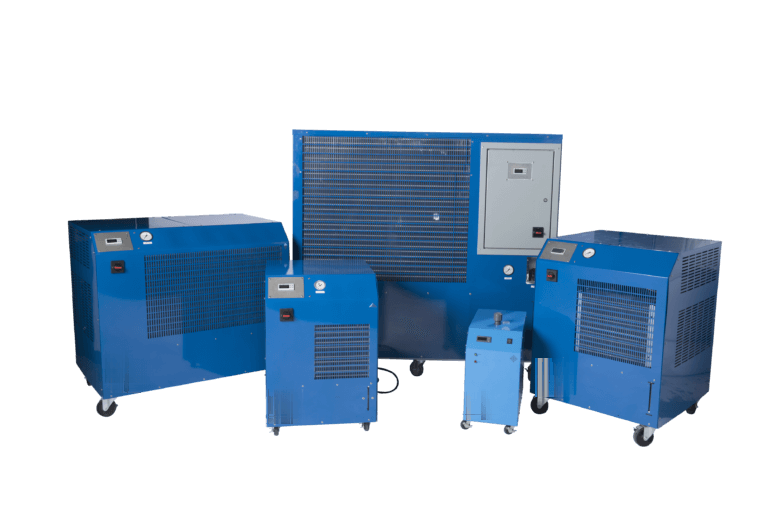
Glycol chiller loops for fermentation temperature control, crash cooling, cold stabilization, jacketed tank cooling, and distillation condenser cooling across craft and commercial beverage operations.
View Recommended ChillersBeer and wine fermentation is entirely temperature-driven. The right yeast strain at the right temperature produces the intended flavor compounds — the wrong temperature produces off-flavors like acetaldehyde, sulfur, and fusel alcohols that can't be corrected after the fact. Crash cooling stops fermentation at exactly the right moment and clarifies the finished product. For wineries, cold stabilization holds wine at 28–32°F for days or weeks to precipitate tartrates before bottling.
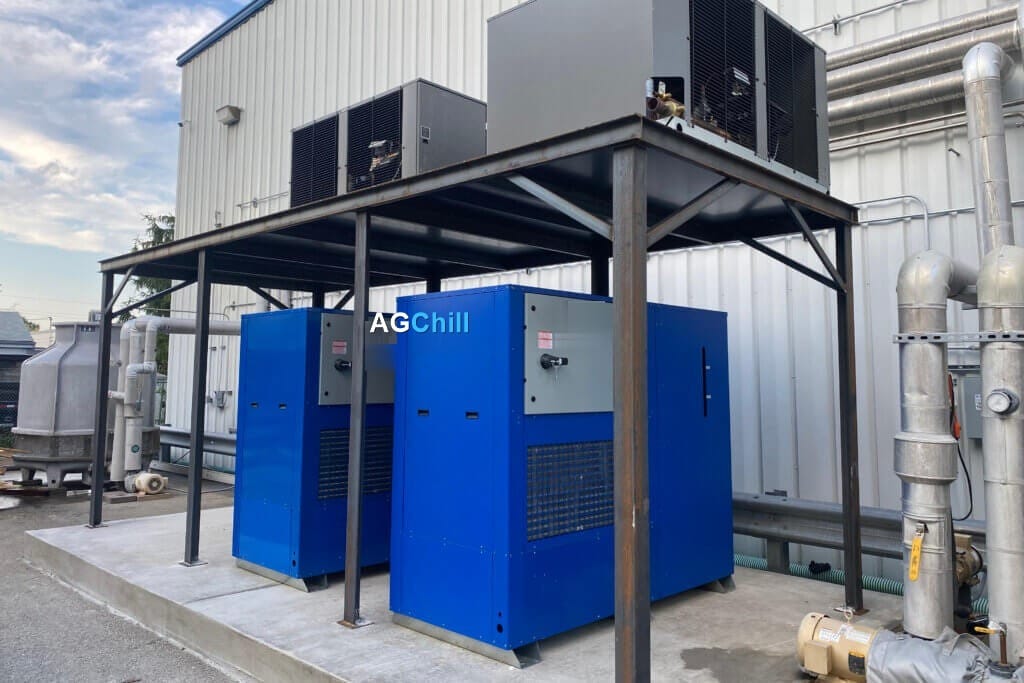
Distilleries depend on the same precise cooling — chilled fluid condenses alcohol vapor back to liquid in the condenser, and unstable condenser temperature means lost product and inconsistent proof. All of this runs through a glycol loop fed by a chiller, which means a chiller failure isn't just a maintenance event, it's a product quality event. During harvest or peak production season, downtime of even a few hours can ruin multiple active fermentation or distillation batches simultaneously.
Applications We Serve
Common process cooling problems in Beverage Industry and why getting the chiller right matters.
Even a 3-4F swing in fermentation temperature can affect flavor profiles, attenuation, and batch-to-batch consistency - especially in ale and lager production.
Many small brewery glycol systems are sized for average load, not peak demand. When multiple tanks call simultaneously during warm weather, undersized chillers can't keep up.
Distilleries rely on chilled fluid to condense alcohol vapor back to liquid. Unstable condenser temperature means lost product, inconsistent proof, and reduced still throughput - precise, reliable cooling is essential.
Our chillers integrate directly with the process equipment that breweries, wineries, and distilleries rely on. These are the systems we most often cool — each with its own temperature target, flow, and failure mode we size for.
The chiller runs the glycol loop that controls fermentation and cold-crash.
The chiller centralizes cooling across multiple tanks and CIP loads.
The chiller cools condensers for spirit and essential-oil recovery.
The chiller drops tanks to stabilization temperature on schedule.
Chiller systems most commonly matched to Beverage Industry applications.

Glycol Chiller System
40F / 4.4C
1/2-50 Ton
Propylene glycol chiller systems sized for brewery and winery glycol loops. Includes pump skid options and loop design support for consistent fermentation control.
Get a Quote
LT Series
10F / -12C
1/2-50 Ton
Low-temperature process chillers for cold stabilization, wine chilling, distillation condenser cooling, and applications requiring fluid temperatures below standard glycol chiller range.
Get a Quote
Central Chiller Package
Custom Range
1/2-50 Ton
Customized solutions and centralized glycol systems for larger facilities with multiple fermentation tanks, bright beer tanks, and CIP cooling loads running simultaneously.
Get a QuoteConfigure your system around your facility, controls, and climate.
In brewing and winemaking, a glycol failure is a product quality event, not just a maintenance call.
A glycol loop failure during active fermentation can ruin dozens of batches simultaneously. If fermentation vessels warm 8–10°F above setpoint, yeast behavior shifts: fermentation stalls or produces off-flavors — acetaldehyde, sulfur compounds, fusel alcohols — that cannot be corrected after the fact. A single ruined batch from a 20-vessel brewhouse represents $50K–$150K in lost product. For wineries, downtime during crush season affects high-value fruit at $3K–$8K per ton and pushes harvest-season workflow back by weeks.
$150K
Maximum value of a single ruined brewhouse batch
8–10°F
Temperature rise that triggers irreversible off-flavor development
Hours
Time to ruin an active fermentation once glycol loop is lost
Whether you're researching options or ready to order, AG Chill can help.
Head brewers and winemakers evaluating glycol systems for a new facility or expansion. Typically searching for brewery chiller sizing, glycol loop design, and fermentation temperature control requirements.
Brewery managers and operations directors evaluating glycol chiller suppliers. Focused on multi-zone control, peak simultaneous demand capacity, crash cooling capability, and expansion potential as tank count grows.
Brewery owners and facility directors at established operations with seasonal peak demand. Need proven beverage-industry references, installation timing around the brewing schedule, and backup chiller options for critical production periods.
Most brewery chillers are sized for average load. AG Chill sizes for the worst-case day — all tanks calling at once in the middle of summer.
Equipment dealers and general distributors size brewery glycol systems on average cooling load. AG Chill sizes for simultaneous peak demand — all tanks calling at once on the hottest day — so the system never falls short during your busiest production periods.
Foodservice refrigeration companies serve small breweries but lack the technical depth for commercial-scale glycol loop design. AG Chill understands fermentation-specific requirements — crash cooling rates, cold stabilization holds, and propylene glycol food-safe system design.
Brewhouse equipment manufacturers bundle generic chillers with their systems at a premium. AG Chill provides purpose-configured glycol systems as a standalone purchase — same quality, without the equipment-bundle markup or proprietary service lock-in.
Imported chillers carry long lead times, parts delays, and service gaps. AG Chill is manufactured in Salt Lake City — faster delivery, local service availability, and no import logistics between you and a replacement part when you need it.
Buying guides and technical resources for Beverage Industry process cooling.

Buying Guide
Fermentation cooling loads, cold stabilization, tank jacket sizing, and glycol system design.
Read the Guide ›
Sizing Guide
Heat load, flow rate, temperature differential, and ambient — how each one drives the size you actually need.
Read the Guide ›
Selection Guide
Installation, operating cost, maintenance, and application fit — which setup makes sense for your facility.
Read the Guide ›Real-world results from Beverage Industry customers.
We are actively documenting customer results from Beverage Industry installations. These will be published here as case studies are completed. Have a project to discuss? We are happy to talk through your application.
Discuss Your ApplicationTell us your target temperature, flow rate, and heat load. AG Chill will identify the right system for your Beverage Industry application.
Most breweries run a glycol loop around 28–30°F to control fermentation, crash-cool, and cold-stabilize; the chiller holds the loop steady across all the tanks.
The wrong temperature produces off-flavors — acetaldehyde, sulfur, fusel alcohols — that cannot be corrected, and a glycol failure during active fermentation can ruin multiple batches at once.