← All Industries
Chemicals & Petrochemicals
Chemical & Petrochemical Chillers
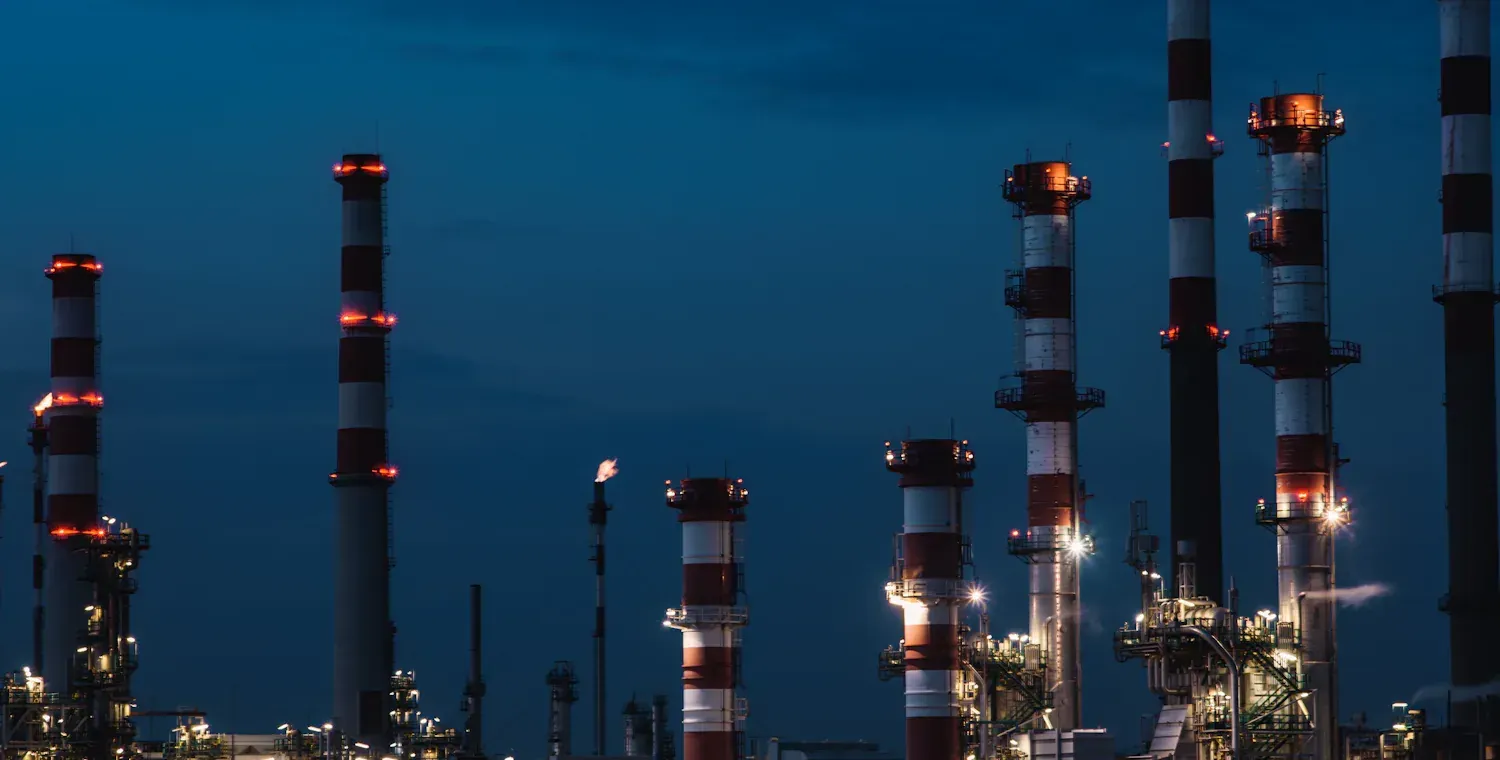
Reactor cooling, distillation column temperature control, and heat exchanger support for chemical and petrochemical processing.
View Recommended Chillers
Reactor cooling, distillation column temperature control, and heat exchanger support for chemical and petrochemical processing.
View Recommended ChillersChemical reactors, distillation columns, and heat exchangers run at high temperature and pressure, where precise temperature control determines reaction kinetics, selectivity, and safety margin. The chiller removes sensible heat from jacketed reactors, condenses distillation overhead vapors, and stabilizes heat exchanger inlet temperatures.
A 5°C deviation can shift yield by 10–20%, trigger runaway exothermic reactions, or violate the process safety envelope. In this industry the chiller is a safety-critical system, not just a process aid.
Common process cooling problems in Chemicals & Petrochemicals and why getting the chiller right matters.
Process coolants often include caustics, chlorinated solvents, or inhibitor packages that attack standard stainless and elastomers. Wetted surfaces need duplex stainless, titanium, or lined steel — sourcing depth most chillers lack.
Jacketed reactors need 300+ GPM at 2–3 bar with ±2°C control and zero-lag response to exothermic spikes. This requires proportional control and dynamic buffering, not a fixed-output chiller.
Chemical operations demand OSHA PSM, ATEX, ASME/PED, and material traceability. The chiller must carry certified documentation and integrate with safety instrumented systems — rigor commodity units don’t provide.
Our chillers integrate directly with the process equipment that Chemicals and Petrochemicals relies on. These are the systems we most often cool — each with its own temperature target, flow, and failure mode we size for.
The chiller removes exothermic reaction heat to hold the setpoint.
The chiller condenses overheads for separation and recovery.
The chiller provides the cold utility side for process cooling loops.
Chiller systems most commonly matched to Chemicals & Petrochemicals applications.
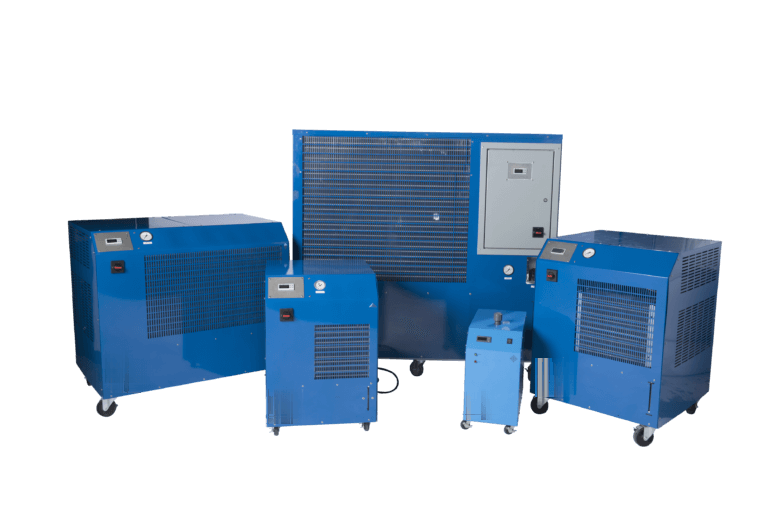
Standard Series
40°F / 4°C
1/3-40 Ton
Process cooling for reactor jackets and heat exchangers with corrosion-resistant wetted materials matched to your process chemistry.
Get a Quote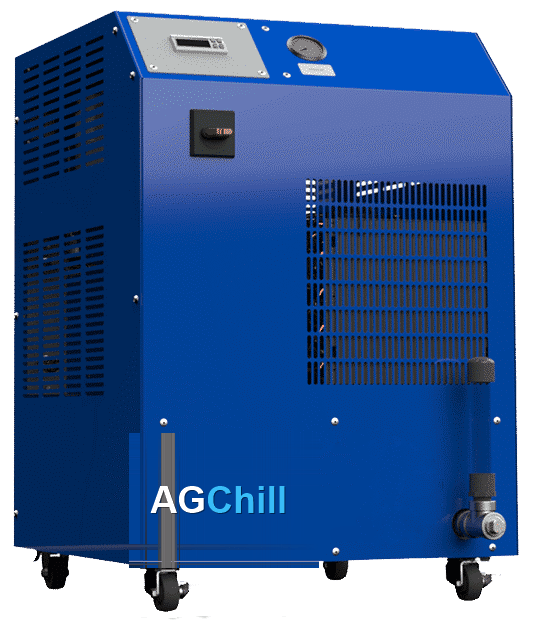
LT Series
10°F / -12°C
½ ~ 30 Ton
Low-temperature cooling for distillation condensers and exothermic reaction control requiring sub-ambient fluid.
Get a Quote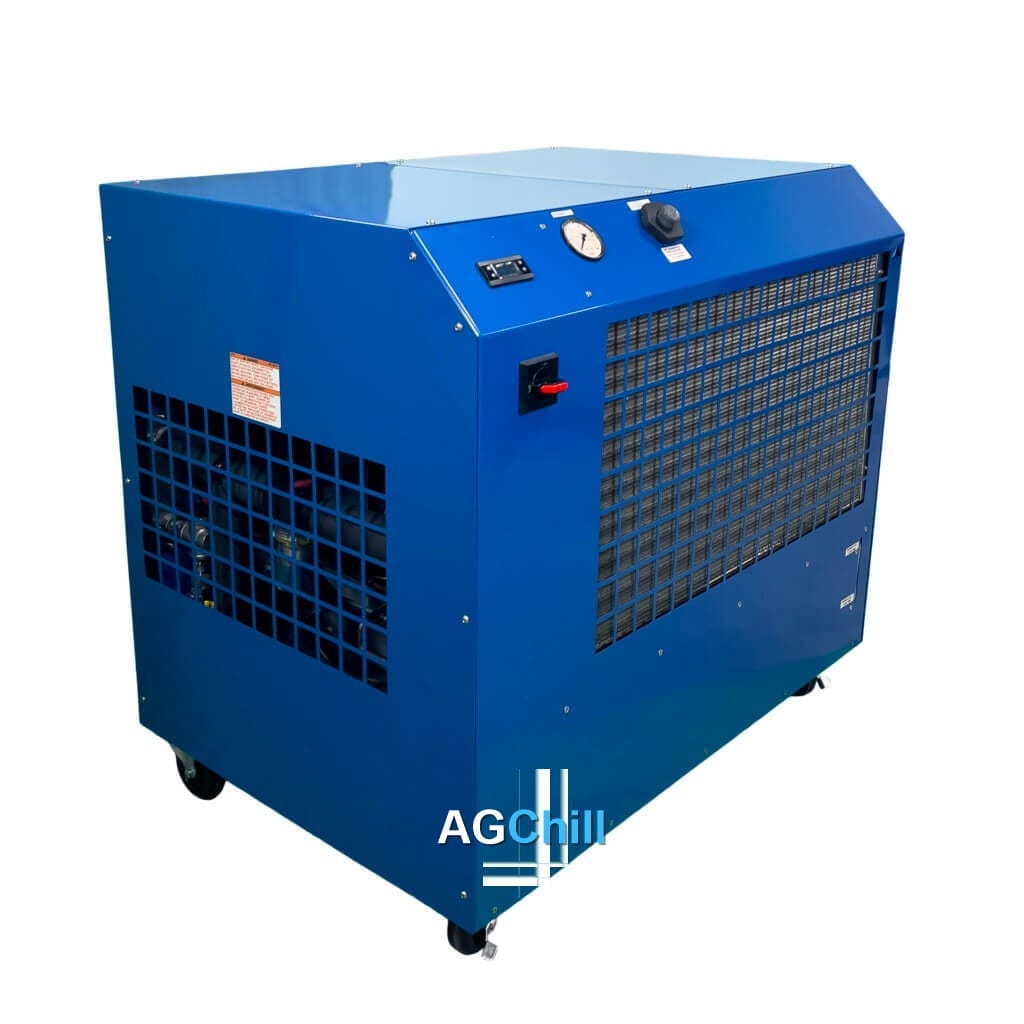
ELT Series
-22°F / -30°C
2-20 Ton
Extra-low temperature systems for cryogenic separation, solvent condensing, and demanding process temperature control.
Get a QuoteIn chemical processing, loss of cooling can mean a ruined batch — or a runaway reaction.
Chiller failure on a reactor causes loss of temperature control; an exothermic runaway risks equipment rupture, toxic release, and potential fatalities, with explosion damage exceeding $5M plus regulatory shutdown. Even non-catastrophic overtemperature reduces selectivity — side reactions spike, producing off-spec product worth $100K–1M per batch and triggering customer penalties. Distillation cooling loss causes vapor carryover, flooding, or condenser collapse.
$5M+
Damage exposure from an exothermic runaway event
10–20%
Yield loss from a 5°C process temperature deviation
$1M
Value of a single off-spec reactor batch
Whether you're researching options or ready to order, AG Chill can help.
Process engineers and technical directors at chemical or contract manufacturers researching reactor cooling, condenser cooling, and exothermic thermal management.
Senior equipment engineers evaluating chillers for a process line or pilot plant — needs materials compatibility data, thermal modeling, and control system integration.
Plant operations or procurement directors in the RFQ phase for expansion. Need ASME/PED certification, material certs, installation support, and a 5-year asset warranty.
Process cooling for chemicals is split between premium specialists and oversized industrial refrigeration. AG Chill is right-sized and faster.
Specialty precision chiller makers offer excellent materials and modeling but at a 40–60% premium with 20–24 week lead times. AG Chill delivers comparable capability on value and turnaround.
Industrial refrigeration integrators build turnkey large-scale packages, but are overkill for 10–50 kW reactor duty with poor part-load efficiency. AG Chill is right-sized for mid-size reactors.
Packaged chiller suppliers offer quick lead times but less engineering depth on exotic materials and PSM integration. AG Chill’s chemical-focused track record is stronger.
Custom loops built from off-the-shelf components carry high CAPEX, design delays, and limited support. AG Chill’s engineered solution reduces the customer’s engineering burden.
Buying guides and technical resources for Chemicals & Petrochemicals process cooling.
Buying Guide
Removing exothermic reaction heat, holding setpoint, and driving crystallization.
Read the Guide ›Sizing Guide
Heat load, flow rate, temperature differential, and ambient — how each one drives the size you actually need.
Read the Guide ›
Selection Guide
Installation, operating cost, maintenance, and application fit — which setup makes sense for your facility.
Read the Guide ›Real-world results from Chemicals & Petrochemicals customers.
We are actively documenting customer results from Chemicals & Petrochemicals installations. These will be published here as case studies are completed. Have a project to discuss? We are happy to talk through your application.
Discuss Your ApplicationTell us your target temperature, flow rate, and heat load. AG Chill will identify the right system for your Chemicals & Petrochemicals application.
They cool reactors and distillation and hold process loops at setpoint, often with corrosion-resistant, code-compliant construction.
An exothermic reaction can run away — a safety hazard and lost batch — and product can go off-spec.