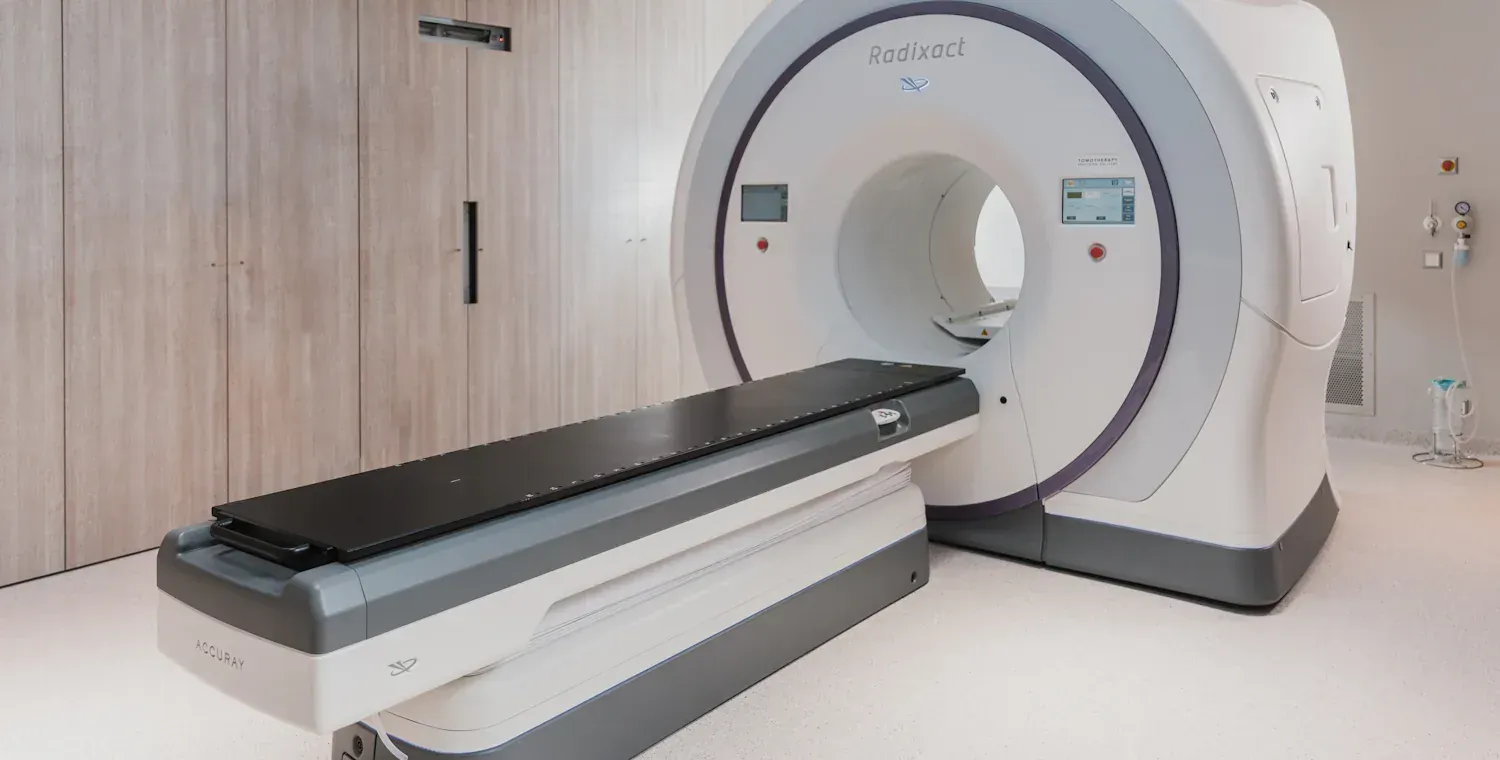
← All Industries
Radiology & Imaging
Radiology & Imaging Center Chillers
Cooling for MRI magnets, CT scanners, linear accelerators, and PET systems in hospitals and imaging centers.
View Recommended Chillers
Cooling for MRI magnets, CT scanners, linear accelerators, and PET systems in hospitals and imaging centers.
View Recommended ChillersMedical imaging systems generate significant heat in their core components: MRI magnets produce cryogenic losses; CT X-ray tubes reach 1000°C+ and require indirect cooling; linear accelerator targets and waveguides generate heat during therapy. The chiller maintains magnet operating temperature, cools X-ray tube fluid, and stabilizes accelerator head temperature.
Cooling downtime directly impacts patient care — scheduled scans and cancer treatments get canceled, and patient safety can be compromised. The chiller is part of the clinical uptime guarantee.
Common process cooling problems in Radiology & Imaging and why getting the chiller right matters.
MRI magnets operate at 1.5–3 Tesla in liquid helium; the chiller supports cryogenic refrigeration or manages boil-off. Standard industrial chillers are useless here — integration with helium recovery is specialized.
CT tubes reach 1000°C during scanning; cooling fluid must absorb 200+ kW transients while holding jacket temperature. Overshoot damages the tube, so rapid load-sensing response is critical.
Imaging cooling integrates with facility chilled-water loops and the building management system, and demands same-day or emergency service. Generic industrial chillers lack this integration and support model.
Our chillers integrate directly with the process equipment that Radiology and Imaging relies on. These are the systems we most often cool — each with its own temperature target, flow, and failure mode we size for.
The chiller cools gradient coils, magnets, and X-ray tubes.
The chiller holds klystron and target temperature for stable dose.
Chiller systems most commonly matched to Radiology & Imaging applications.
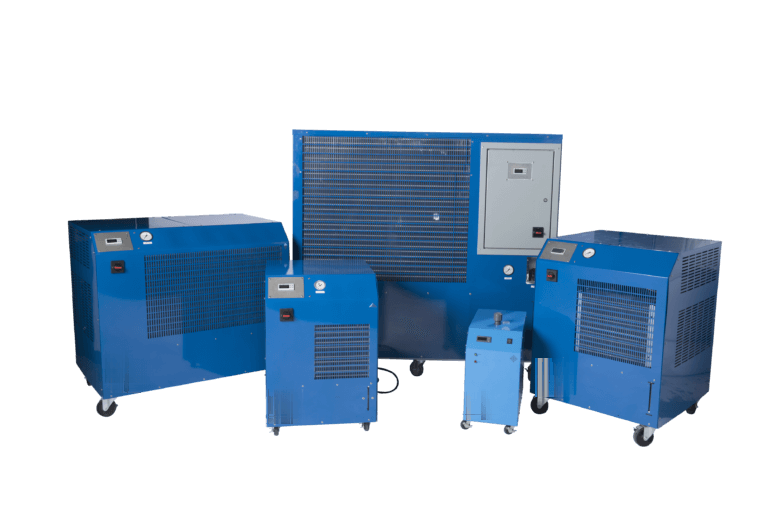
Standard Series
40°F / 4°C
1/3-40 Ton
Reliable process cooling for CT scanners, linear accelerators, and imaging equipment with hospital infrastructure integration.
Get a QuoteCentral Chiller
45°F / 7°C
10-50 Ton
Centralized cooling for imaging suites and multi-modality centers with 24/7 uptime and redundancy options.
Get a Quote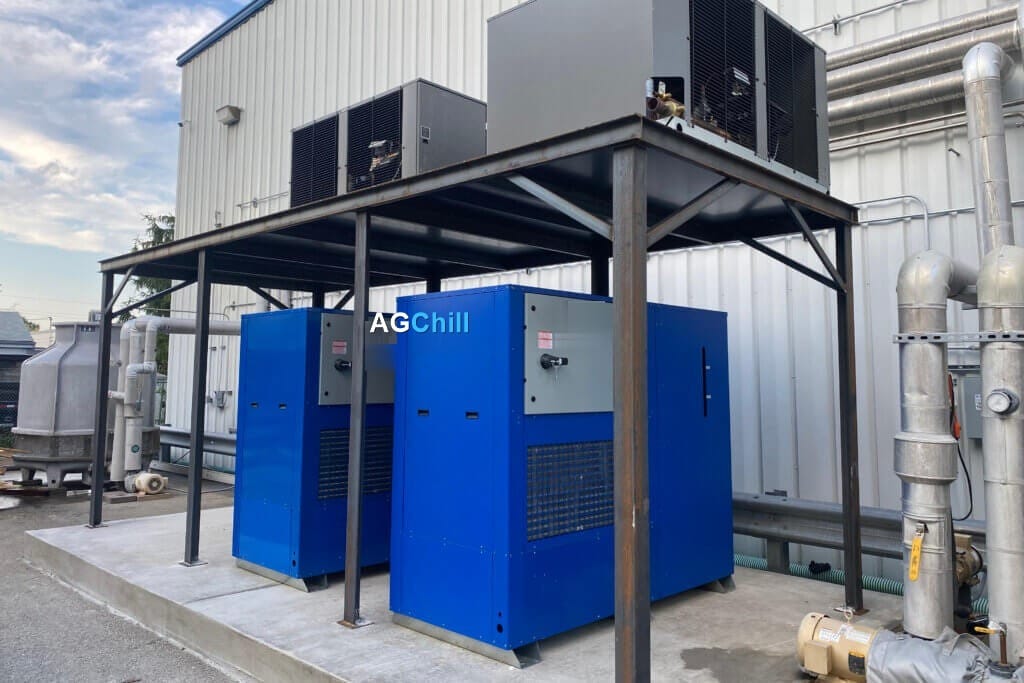
ULT Series
-112°F / -80°C
1/2-20 Ton
Ultra-low temperature cooling supporting MRI magnet systems and advanced imaging.
Get a QuoteIn imaging, a cooling failure cancels patient care — and can quench a million-dollar magnet.
MRI chiller failure accelerates helium boil-off; the magnet quenches — a catastrophic $500K–1.5M loss with 3–6 months downtime to replace and re-shim. CT scanner cooling loss trips the X-ray tube thermal cutout, canceling all CT exams for 24–72 hours and forcing referrals at $100K–500K per day in lost revenue. Linear accelerator cooling failure aborts therapy sessions, disrupting cancer treatment plans and patient outcomes.
$1.5M
Cost of a quenched MRI magnet
$500K/day
Revenue lost when imaging goes offline
24/7
Uptime clinical imaging requires
Whether you're researching options or ready to order, AG Chill can help.
Biomedical equipment managers and facilities engineers at hospitals or imaging centers researching MRI magnet cooling, CT scanner chillers, and medical imaging cooling.
Directors of radiology evaluating cooling for new equipment or an upgrade — needs imaging-system integration validation, infrastructure compatibility, and uptime SLA documentation.
Hospital CFOs or VPs of operations approving capex. Need healthcare compliance, an uptime warranty with downtime penalties, 24/7 service, and imaging-vendor integration.
Imaging cooling is locked to medical OEMs or handled by generic HVAC contractors. AG Chill is medical-focused and independent.
Medical-imaging OEMs integrate cooling into imaging systems, but repair is OEM-only — expensive and slow. AG Chill captures facility-level cooling and retrofits.
Hospital HVAC contractors medical divisions know facility cooling but take a generic, reactive approach not optimized for high-demand imaging. AG Chill’s medical focus wins on reliability.
Specialty medical chiller makers are purpose-built but carry a 50%+ premium with OEM-tied support. AG Chill’s value and independence appeal.
Custom infrastructure carries high engineering cost and support burden. AG Chill’s turnkey approach reduces complexity and risk.
Buying guides and technical resources for Radiology & Imaging process cooling.
Buying Guide
Why MRI, CT, and linac systems need continuous, redundant, OEM-spec cooling.
Read the Guide ›Sizing Guide
Heat load, flow rate, temperature differential, and ambient — how each one drives the size you actually need.
Read the Guide ›Selection Guide
Installation, operating cost, maintenance, and application fit — which setup makes sense for your facility.
Read the Guide ›Real-world results from Radiology & Imaging customers.
We are actively documenting customer results from Radiology & Imaging installations. These will be published here as case studies are completed. Have a project to discuss? We are happy to talk through your application.
Discuss Your ApplicationTell us your target temperature, flow rate, and heat load. AG Chill will identify the right system for your Radiology & Imaging application.
MRI magnets, CT scanners, and linear accelerators generate heat that a chiller must remove continuously to keep the imaging system operating.
The scanner can shut down or, in the worst case, risk a magnet quench — costly downtime for a critical asset.