← All Industries
Machine Building
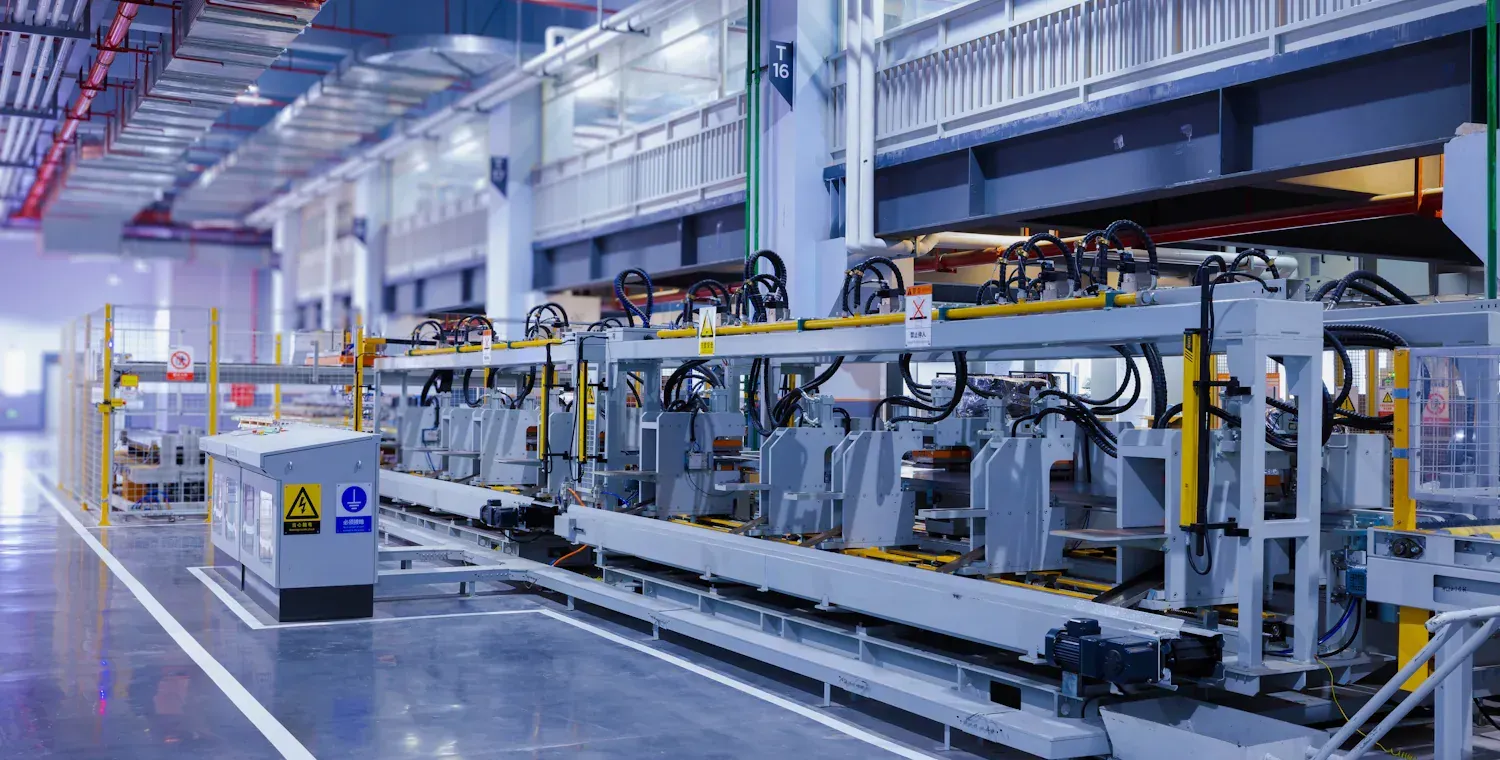
Machine Building & CNC Chillers
Spindle cooling, cutting fluid temperature control, and hydraulic oil cooling for CNC machining centers and precision machine tools.
View Recommended Chillers
Spindle cooling, cutting fluid temperature control, and hydraulic oil cooling for CNC machining centers and precision machine tools.
View Recommended ChillersPrecision machine tools generate intense localized heat at the cutting zone and throughout the spindle, ballscrews, and hydraulic systems. Cutting fluid circulates to remove chips and dissipate frictional heat; the chiller holds that fluid at a stable 18–28°C to protect dimensional accuracy, tool life, and surface finish.
Temperature drift of even 1–2°C changes metal expansion, throws off micron-level tolerances, and shortens spindle bearing life. For machine builders, the chiller is a core part of the machine’s accuracy specification — not an accessory.
Common process cooling problems in Machine Building and why getting the chiller right matters.
Modern CNC centers pack 100+ kW spindles, high-flow hydraulics, and servo drives into a tight cabinet. Cooling can exceed 80 kW sustained, and lines must fit between structural members. Bulky off-the-shelf chillers force redesign.
Spindle coolant wants 20°C, hydraulic oil prefers 45°C, servo axes favor 25°C. A single zone-controlled chiller avoids expensive multi-unit stacking that wastes energy and space.
High-flow grinding and water-soluble coolants are prone to bacterial growth, oxidation, and sludge. Poor chiller design accelerates this, cutting fluid life from 18 months to 6 and driving up disposal cost.
Our chillers integrate directly with the process equipment that Machine Building relies on. These are the systems we most often cool — each with its own temperature target, flow, and failure mode we size for.
The chiller holds spindle and coolant temperature for dimensional accuracy.
The chiller rejects heat so thermal growth stays within tolerance.
Chiller systems most commonly matched to Machine Building applications.
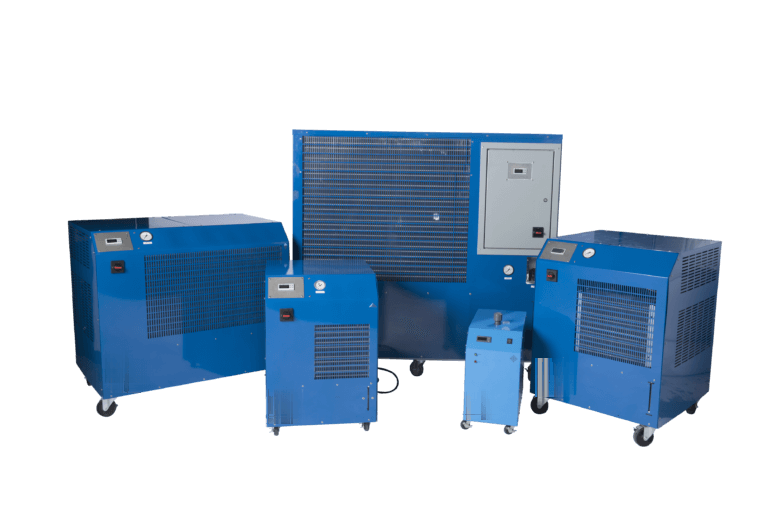
Standard Series
40°F / 4°C
1/3-40 Ton
Precision spindle and cutting fluid cooling with tight setpoint control for CNC machining centers and grinding equipment.
Get a Quote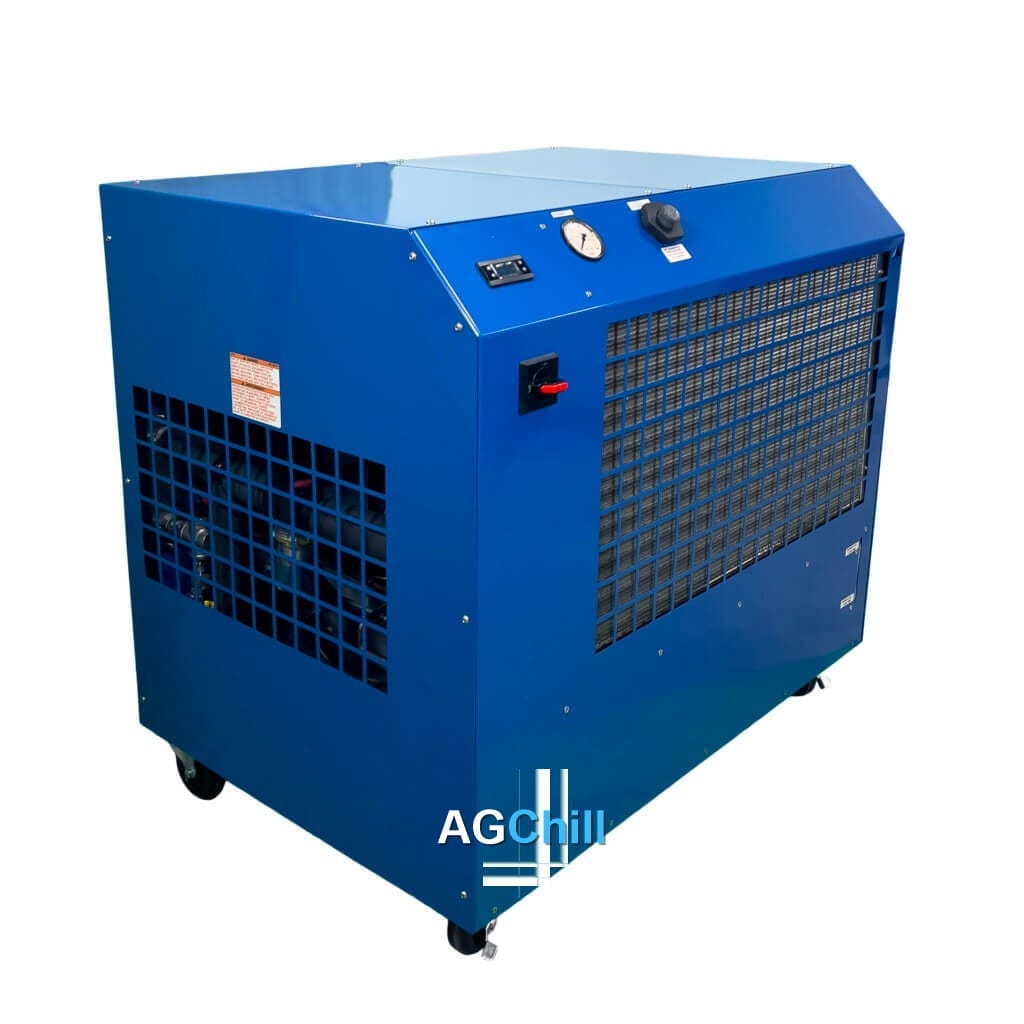
Portable Chiller
50°F / 10°C
1-15 Ton
Dedicated point-of-use cooling for individual machine tools, easily relocated as the shop floor layout changes.
Get a QuoteCentral Chiller
45°F / 7°C
10-50 Ton
Centralized cooling for multi-machine shops, sized for simultaneous spindle and hydraulic loads across the floor.
Get a QuoteWhen the chiller drifts, micron-level tolerances go with it — and the scrap pile grows fast.
Chiller failure warms cutting fluid beyond setpoint; workpiece dimensions drift out of tolerance, triggering scrap rates of 5–15% on precision jobs worth $50K–500K per run. Spindle bearing overheating drops bearing life from 10,000 hours to under 2,000, forcing unplanned downtime and $15K–40K spindle replacement. Hydraulic oil degradation shortens pump and valve life and erodes customer trust when delivery dates slip.
1–2°C
Drift that pushes precision parts out of tolerance
5–15%
Scrap rate on precision runs from coolant temperature drift
$40K
Spindle replacement after bearing overheating
Whether you're researching options or ready to order, AG Chill can help.
Design engineers and manufacturing planners at machine tool builders researching spindle cooling, CNC chiller specs, and cutting fluid temperature control.
Technical buyers comparing chiller options for a new machine platform — evaluating thermal capacity, integration complexity, cost per kW, and ISO/DIN compliance.
OEM purchasing managers preparing a production BOM. Need technical drawings for cabinet fit, lead-time guarantees, volume pricing, and field service support.
Most machine-tool cooling comes bundled by the OEM or repurposed from generic chillers. AG Chill engineers for the machine.
Integrated OEM suppliers pre-validate systems for major OEM platforms but lock builders into high minimums and fixed annual pricing. AG Chill serves the underserved mid-market and custom builders.
Generic industrial chiller suppliers deliver proven thermal performance but with a generic, add-on feel. AG Chill’s machine-centric design integrates like a native component.
Local shops rebuild used chillers cheaply but with no warranty, uncertain performance, and limited support. AG Chill’s new-build quality and SLA win on risk.
Custom skids assembled from parts carry high failure rates and zero after-sale support, leaving the integrator liable. AG Chill’s turnkey, warrantied approach removes that exposure.
Buying guides and technical resources for Machine Building process cooling.
Buying Guide
Why water-temperature stability protects beam quality, optics, and the laser source.
Read the Guide ›Sizing Guide
Heat load, flow rate, temperature differential, and ambient — how each one drives the size you actually need.
Read the Guide ›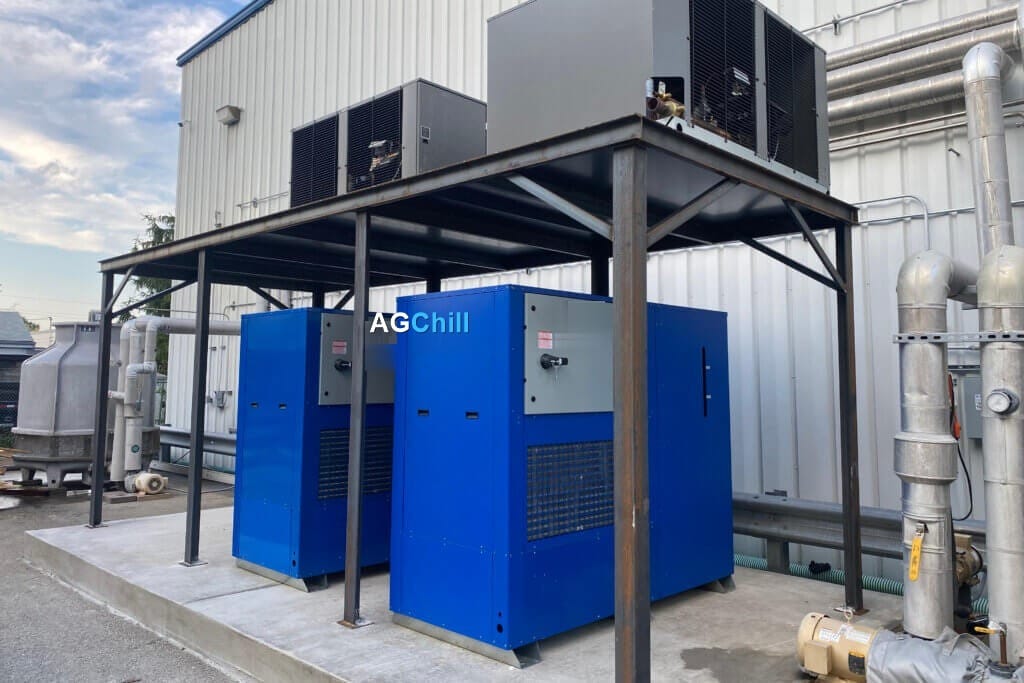
Selection Guide
Installation, operating cost, maintenance, and application fit — which setup makes sense for your facility.
Read the Guide ›Real-world results from Machine Building customers.
We are actively documenting customer results from Machine Building installations. These will be published here as case studies are completed. Have a project to discuss? We are happy to talk through your application.
Discuss Your ApplicationTell us your target temperature, flow rate, and heat load. AG Chill will identify the right system for your Machine Building application.
For spindle cooling, cutting-fluid cooling, and hydraulic-oil cooling on machining centers, and as embedded cooling in OEM equipment.
Thermal growth throws off precision, tool life drops, and part tolerances suffer.