Industrial water chillers and process cooling equipment for food production lines, ingredient temperature control, packaging equipment, and sanitary food-grade applications.
View Recommended ChillersFood processing demands temperature control at every stage — pasteurization, ingredient cooling, product mixing, and finished goods storage. After cooking or pasteurization, product must be cooled below 41°F within a defined window to prevent bacterial growth. Failure to hit that window is a HACCP violation and a potential recall trigger, not just a quality concern.
Dairy, meat, seafood, and ready-to-eat meal production all depend on chillers to meet FDA, USDA, and state health department requirements. The chiller isn't just a piece of equipment — it's a compliance tool that determines whether the facility can legally ship product. Documented temperature control is required; the chiller generates that record on every production run.
Applications We Serve
Common process cooling problems in Food & Beverage and why getting the chiller right matters.
Food-grade applications require sanitary fittings, approved fluids (propylene glycol), stainless wetted parts, and system designs that support CIP cleaning protocols.
Food processing lines run continuous cooling loads that fluctuate with production rate and ambient temperature. Chillers must be sized for sustained operation, not just peak or average.
Temperature control directly affects food safety and shelf life. Chiller selection, fluid type, and system design need to support HACCP plans and food safety documentation.
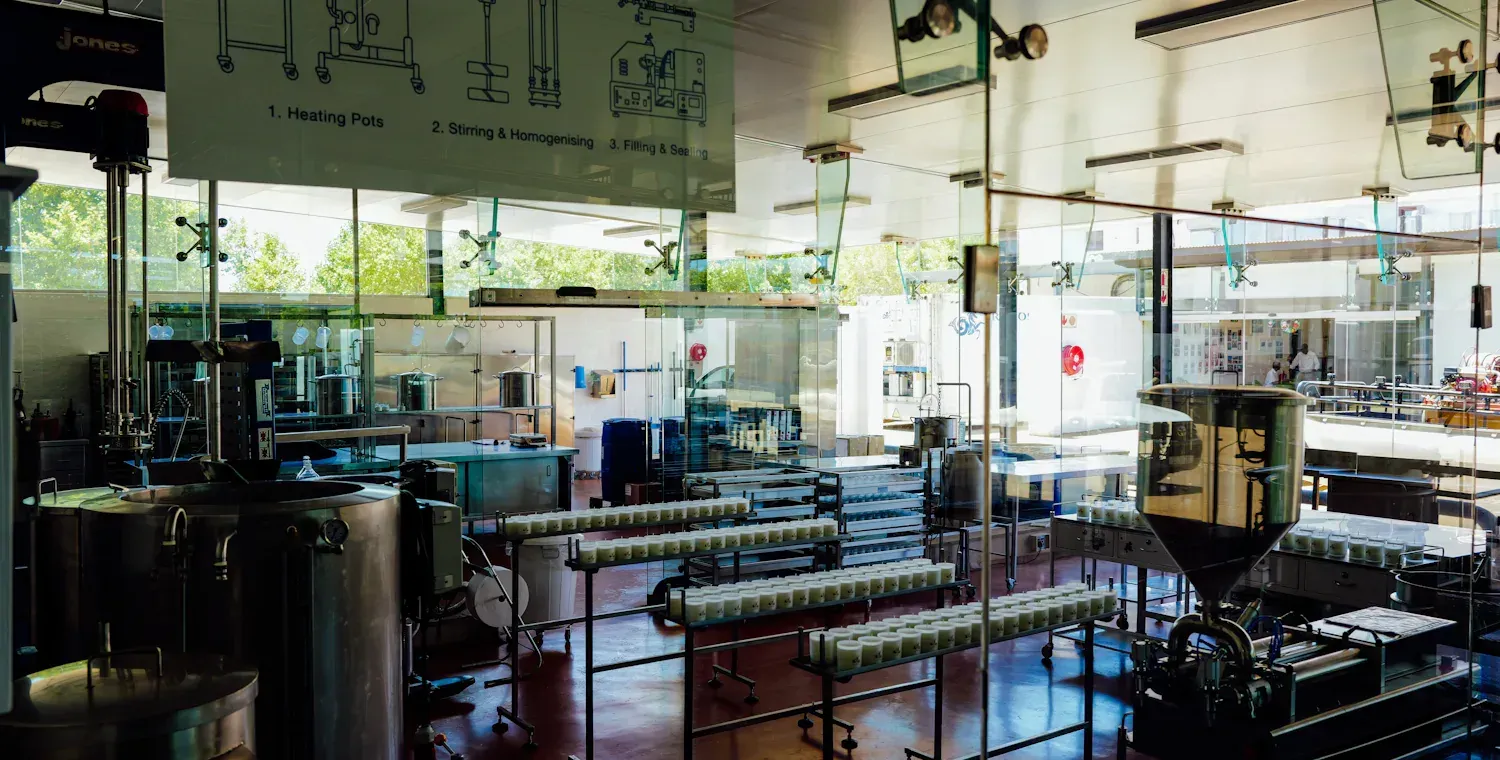
Our chillers integrate directly with the process equipment that Food Processing relies on. These are the systems we most often cool — each with its own temperature target, flow, and failure mode we size for.
The chiller cools product streams to safe, stable temperatures.
The chiller pulls batch temperature down on a controlled curve.
The chiller holds precise temper temperatures for gloss and snap.
The chiller drives the rapid cooling leg after the hold tube.
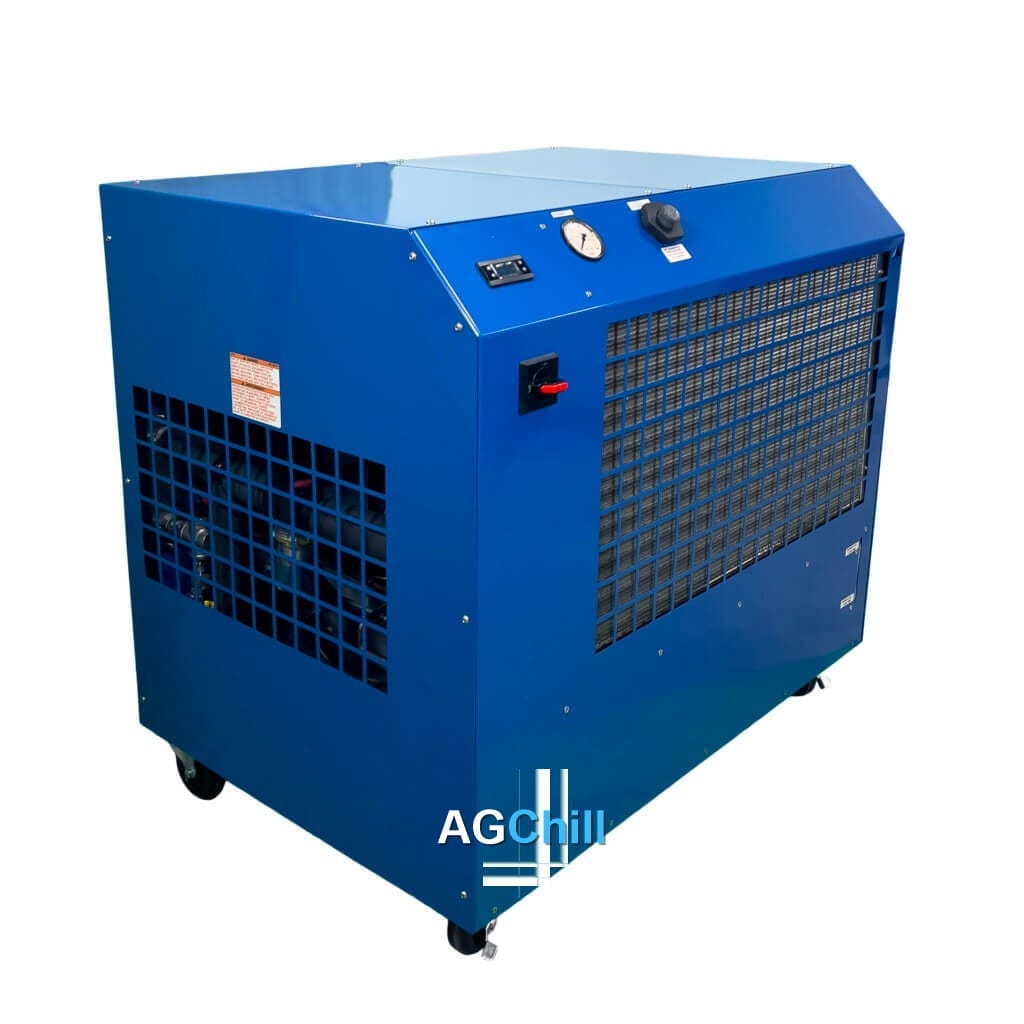
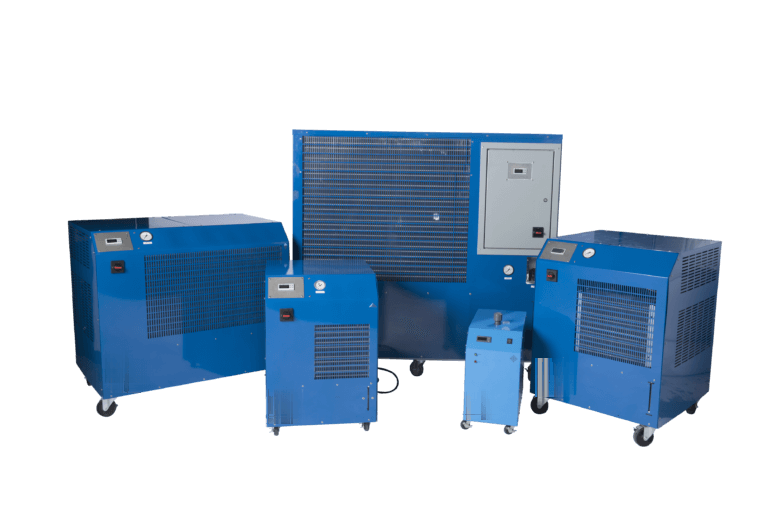
Chiller systems most commonly matched to Food & Beverage applications.

Food-Grade Glycol Package
28F / -2C
2-20 Ton
Propylene glycol chiller systems with sanitary pump skids, stainless wetted components, and food-grade fluid for direct or indirect contact cooling applications.
Get a Quote
Portable Process Chiller
40F / 4C
1-10 Ton
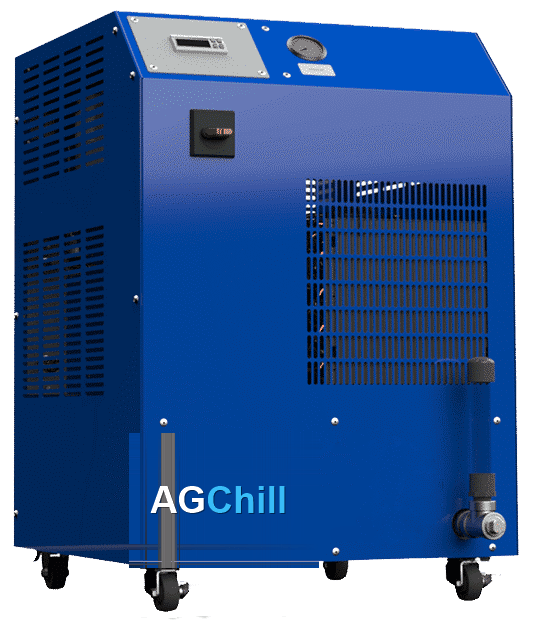
Self-contained air-cooled process chillers for point-of-use food line cooling. Easy to install and relocate as production layouts change.
Get a Quote
Central Cooling Package
Custom Range
10-50 Ton
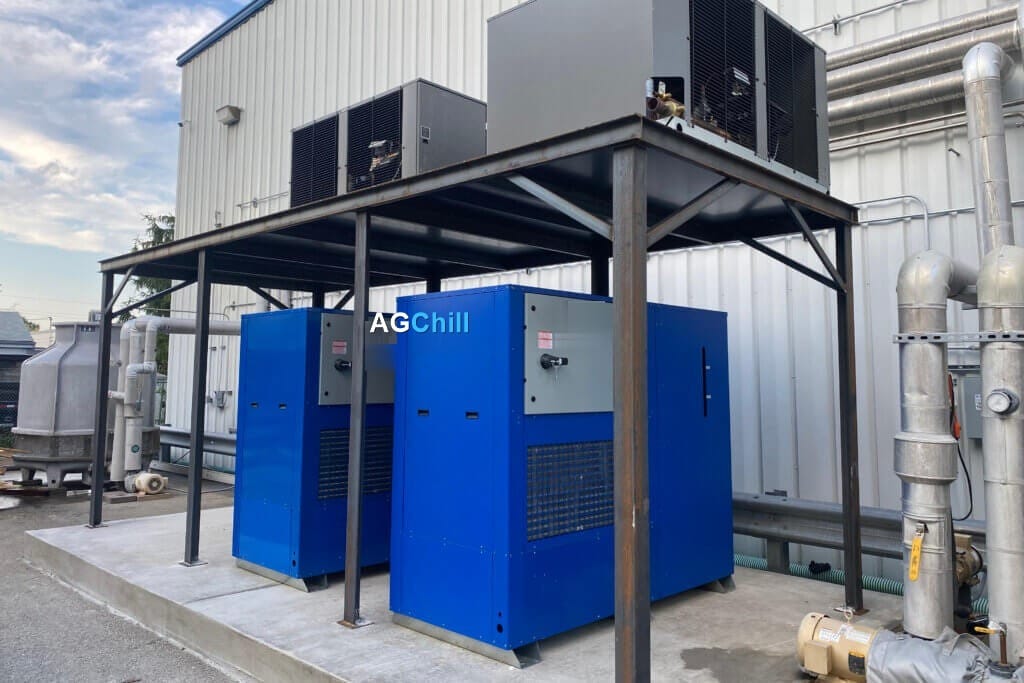
Centralized process cooling for large food production facilities with multiple production lines, packaging equipment, and ingredient storage.
Get a QuoteIn food processing, a chiller failure is a food safety event and a regulatory event — not just downtime.
A chiller breakdown during peak production causes cascading failures. If a dairy facility can't cool pasteurized product below 41°F within the required window, the batch becomes non-saleable — a HACCP violation that mandates disposal. For meat and seafood processors, loss of cooling capacity during a shift means product that exceeds safe temperature exposure time must be destroyed: a $50K–$200K loss per shift depending on line size. Regulatory agencies may issue citations, conduct investigations, or suspend operating licenses on repeat incidents. Food service accounts cancel contracts when delivery windows are missed.
$200K
Maximum batch loss per production shift
41°F
FDA threshold — above this triggers a HACCP violation
2–4 hrs
Maximum safe temperature exposure window before disposal is required
Whether you're researching options or ready to order, AG Chill can help.
Production supervisors and plant managers at small-to-mid food processors evaluating process cooling options. Typically searching for food-grade chiller requirements, HACCP temperature control, and sanitary cooling system design.
Process engineers and maintenance managers at mid-size food manufacturers evaluating chiller suppliers. Focused on sanitary design, HACCP documentation support, food-grade glycol compatibility, and multi-line capacity.
VP of Operations and plant directors at established food processors. Need proven food-industry references, full compliance documentation, temperature data logging for audit trails, and a maintenance contract with guaranteed response time.
Food processing chillers need to meet food safety standards from the start — not be adapted to them after installation.
Local HVAC contractors and general industrial distributors provide equipment without HACCP-compatible documentation. AG Chill provides the temperature control records and system documentation food facilities need for regulatory audits and food safety plans.
General industrial chillers often use ethylene glycol — which is toxic and prohibited in food-contact applications. AG Chill food processing systems use propylene glycol as standard, with sanitary fittings and material compatibility appropriate for food production environments.
Large food-processing line OEMs integrate proprietary chillers into complete processing lines at premium prices. AG Chill delivers the same food-safe cooling capability as a standalone system — compatible with any production line, without the OEM lock-in.
Imported chillers mean longer lead times and harder-to-source replacement parts. AG Chill manufactures in Salt Lake City — faster commissioning, local service availability, and faster response when something needs attention during a production run.
Buying guides and technical resources for Food & Beverage process cooling.

Buying Guide
Food-safe glycol, the cooling window for safety, sanitary design, and the records HACCP requires.
Read the Guide ›
Sizing Guide
Heat load, flow rate, temperature differential, and ambient — how each one drives the size you actually need.
Read the Guide ›
Selection Guide
Installation, operating cost, maintenance, and application fit — which setup makes sense for your facility.
Read the Guide ›Real-world results from Food & Beverage customers.
We are actively documenting customer results from Food & Beverage installations. These will be published here as case studies are completed. Have a project to discuss? We are happy to talk through your application.
Discuss Your ApplicationTell us your target temperature, flow rate, and heat load. AG Chill will identify the right system for your Food & Beverage application.
For pasteurization cooling, jacket and process cooling, and CIP-loop cooling, with food-safe, sanitary design.
Product can spoil or fall out of HACCP-required temperature, risking a hold or recall.