Blood bank chillers and ultra-low temperature cascade systems for biological sample preservation, biorepository operations, lyophilization support, and biomedical research requiring stable −40°C to −86°C environments.
View Recommended ChillersBiological samples — blood plasma, tissue, stem cells, vaccines, and research specimens — lose viability when temperature fluctuates. Ultra-low-temperature storage at −40°C to −86°C preserves cellular and biomolecular integrity for months or years. Stability isn't optional: ice crystal formation during partial thaw and refreeze cycles ruptures cell membranes and degrades proteins, DNA, and RNA in ways that cannot be reversed.
In blood banking, a brief excursion above the allowable storage temperature renders units unsuitable for transfusion. In biorepositories supporting clinical trials, sample degradation invalidates data from studies that may have taken years and millions of dollars to build — and the samples often cannot be re-collected. The chiller is the last line of defense between a functioning sample archive and irreversible loss.
Biological samples — blood plasma, tissue, stem cells, vaccines — are irreplaceable. A single temperature excursion can destroy years of research or hundreds of thousands of dollars in stored product. Buyers in this space don't purchase on price. They purchase on reliability, documentation, and proven uptime.
ULT chiller systems for biomedical applications are among the highest-margin industrial cooling products available. Buyers expect to pay for quality and have the budget to do it.
Get a QuoteWhy standard process chillers aren't sufficient for biomedical and blood banking applications.
Blood plasma, biological tissue, stem cells, and research samples cannot be replaced if a temperature excursion occurs. A single chiller failure can result in catastrophic, unrecoverable loss — making uptime and redundancy non-negotiable priorities.
FDA, CLIA, CAP, and AABB accreditation all require documented temperature monitoring, validated equipment, and audit-ready records. The chiller isn't just equipment — it's part of your compliance infrastructure and must be specified accordingly.
Biological storage does not have a pause button. ULT systems must maintain −40°C to −86°C targets 24 hours a day, 365 days a year, with alarm response plans and documented recovery procedures for any deviation.
Our chillers integrate directly with the process equipment that Biomedical and Blood Banking relies on. These are the systems we most often cool — each with its own temperature target, flow, and failure mode we size for.
The chiller provides the cascade cooling that reaches ultra-low storage temps.
The chiller holds tight, validated storage temperatures.
The chiller drives precise, programmed freeze curves for cell viability.
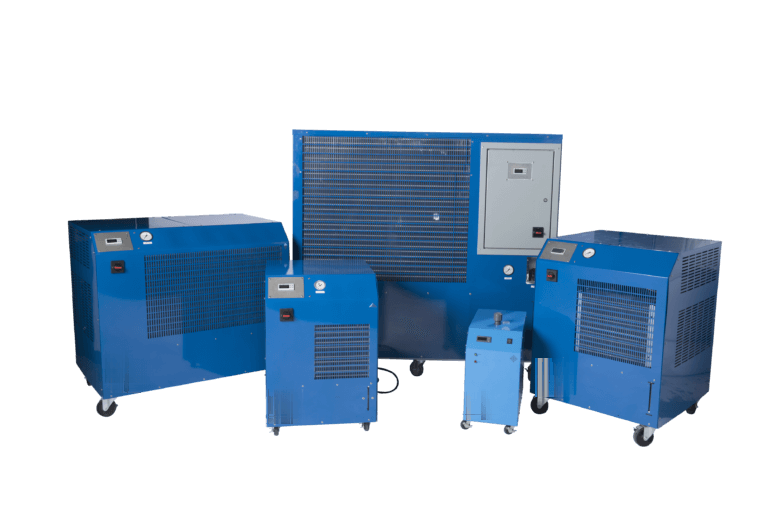
ULT and ultra-low cascade systems matched to biomedical storage and research applications.

ULT Series — Primary Recommendation
−112°F / −80°C
½–30 Ton
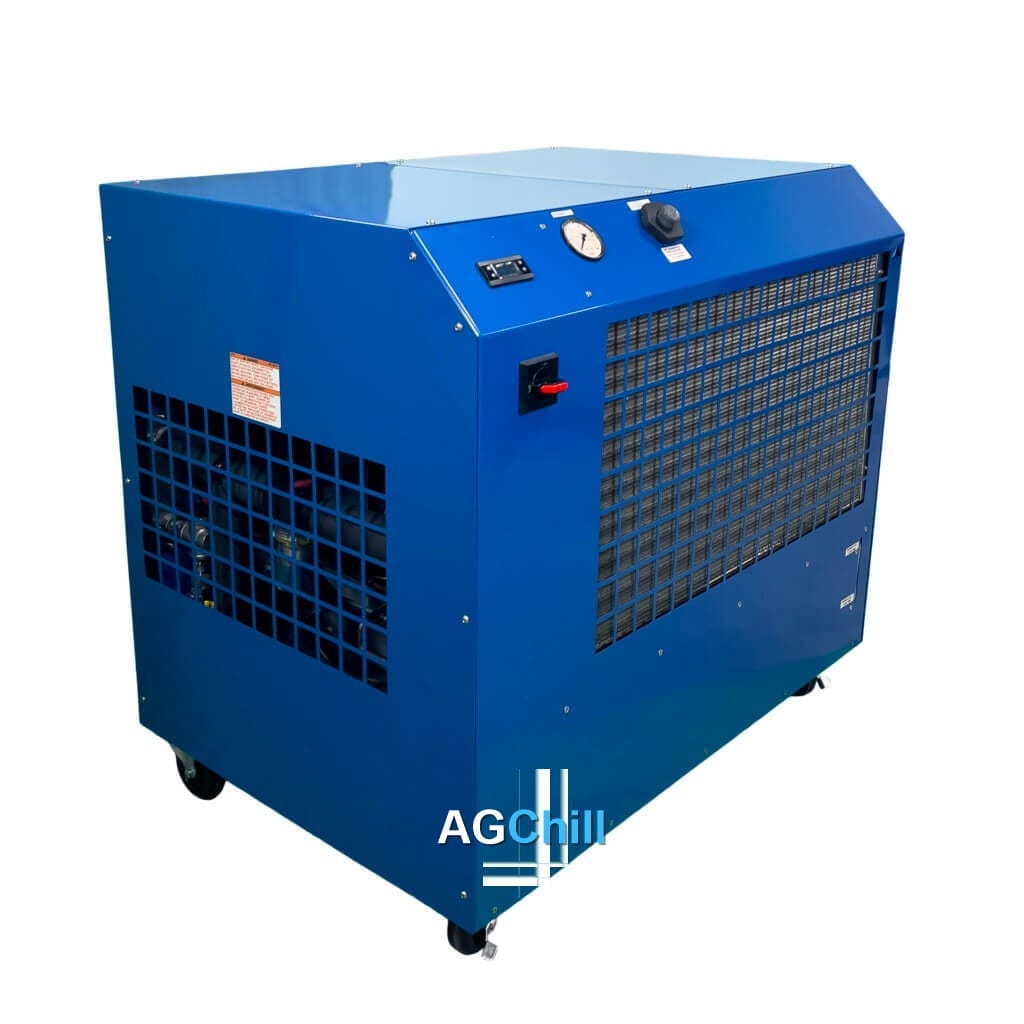
Cascade refrigeration systems delivering the −40°C to −86°C range required for biological sample storage, blood banking, and biorepository operations. Stable, continuous temperature performance with alarm-ready control systems.
Get a Quote
ELT Series
−22°F / −30°C
2–20 Ton
Extra-low temperature systems for secondary storage, transport staging, or biomedical research applications where −20°C to −30°C is the target operating range — such as plasma derivative processing or reagent storage.
Get a Quote
Custom Biomedical Package
Configured to Spec
Application-Specific
Integrated ULT chiller with redundant controls, remote temperature monitoring, high/low alarm outputs, and documentation support for FDA or CLIA validation. Built around your specific facility and compliance requirements.
Get a QuoteBiological samples are irreplaceable. A chiller failure isn't a downtime event — it's a permanent loss event.
A chiller failure in a −40°C or −86°C storage system causes rapid temperature rise inside the chamber. If the system warms to −10°C or above — even for just 2–4 hours during emergency repair — thousands of stored samples experience partial thaw and refreeze, degrading cellular and biomolecular integrity in ways that cannot be reversed. In a blood bank, units that exceed allowable storage temperature must be destroyed per FDA and AABB standards — a large facility might lose 500–2,000 units. In a biorepository supporting clinical trials, sample loss means failed assay batches, invalid trial data, and potential trial termination. Samples from rare patient populations or specific timepoints cannot be re-collected.
2–4 hrs
Window before samples may be permanently compromised
$50K+
Typical blood bank loss per incident depending on unit count and type
Irreplaceable
Clinical trial samples from rare populations cannot be re-collected
Whether you're researching options or ready to order, AG Chill can help.
Laboratory managers and sample storage supervisors at hospital blood banks or small biorepositories. Searching for ultra-low temperature chiller maintenance, −86°C storage support, and blood bank refrigeration requirements.
Biorepository managers and directors of laboratory operations evaluating ULT chiller suppliers. Focused on temperature stability (±2–3°C), remote alarm and monitoring systems, redundancy options, and CLIA/CAP/FDA compliance documentation.
Directors of operations and quality assurance directors at large blood banks, clinical trial biorepositories, and research institutions. Need regulatory compliance package, automated backup/failover, 24/7 emergency support SLA, and temperature audit trail integration.
Biomedical buyers don't purchase on price. They purchase on reliability, documentation, and proven uptime — and that's exactly where AG Chill is built to compete.
Most industrial chiller suppliers provide equipment — not documentation. AG Chill ULT systems come with the regulatory compliance support (CLIA, CAP, FDA) that blood banks, biorepositories, and regulated labs require for inspections and equipment qualification.
Cryogenic-storage equipment OEMs bundle proprietary chillers — locking you into their pricing and service ecosystem. AG Chill delivers the same −80°C cascade capability as a standalone system with full serviceability and no vendor restriction.
Local biomedical refrigeration companies offer familiarity but often can't commit to same-day emergency response for critical failures. AG Chill supports 24/7 emergency response — because when a blood bank chiller fails at 2am, a next-business-day response isn't acceptable.
Imported ULT systems carry parts delays that can stretch into days or weeks. AG Chill manufactures in Salt Lake City — faster parts availability, direct service support, and no import logistics between you and getting a critical system back online.
Technical resources for biomedical and blood banking process cooling.

Biomedical
Temperature requirements, system sizing, redundancy planning, and alarm specifications for blood bank and biorepository ULT cooling applications.
Read Guide ›
Sizing Guide
Heat load, flow rate, temperature differential, and ambient — how each one drives the size you actually need.
Read the Guide ›
Selection Guide
Installation, operating cost, maintenance, and application fit — which setup makes sense for your facility.
Read the Guide ›Real-world results from Biomedical customers.
We are actively documenting customer results from Biomedical installations. Have a project to discuss? We are happy to talk through your application.
Discuss Your ApplicationTell us your target temperature, redundancy requirements, and compliance needs. AG Chill will identify the right ULT system for your biomedical application.
Biological samples, blood, and biorepositories often need ultra-low storage from −40°C to −86°C, which cascade ULT chillers reach.
Samples and biologics can be lost permanently — a compliance and irreplaceable-inventory event.