Laser & Photonics Chillers
← All Industries Laser & Photonics

Laser & Photonics Chillers

Precision, low-drift cooling for laser cutting, welding, marking, medical, and photonics systems — protecting the diodes, optics, and beam quality your process depends on.

View Recommended Chillers
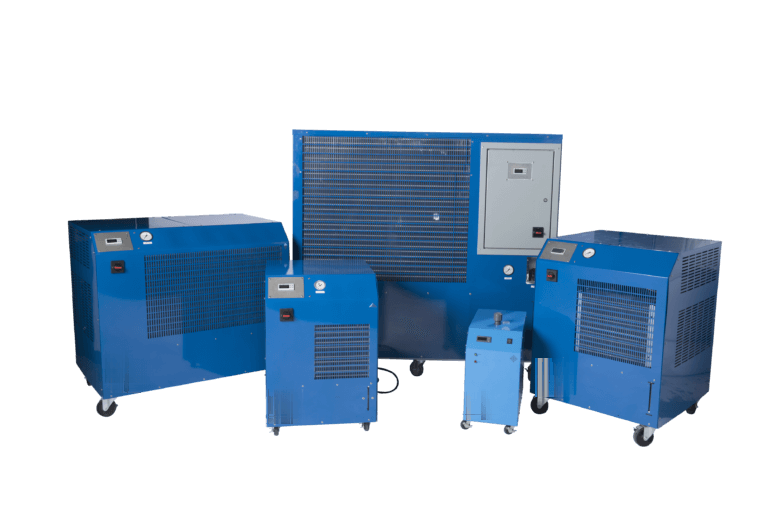
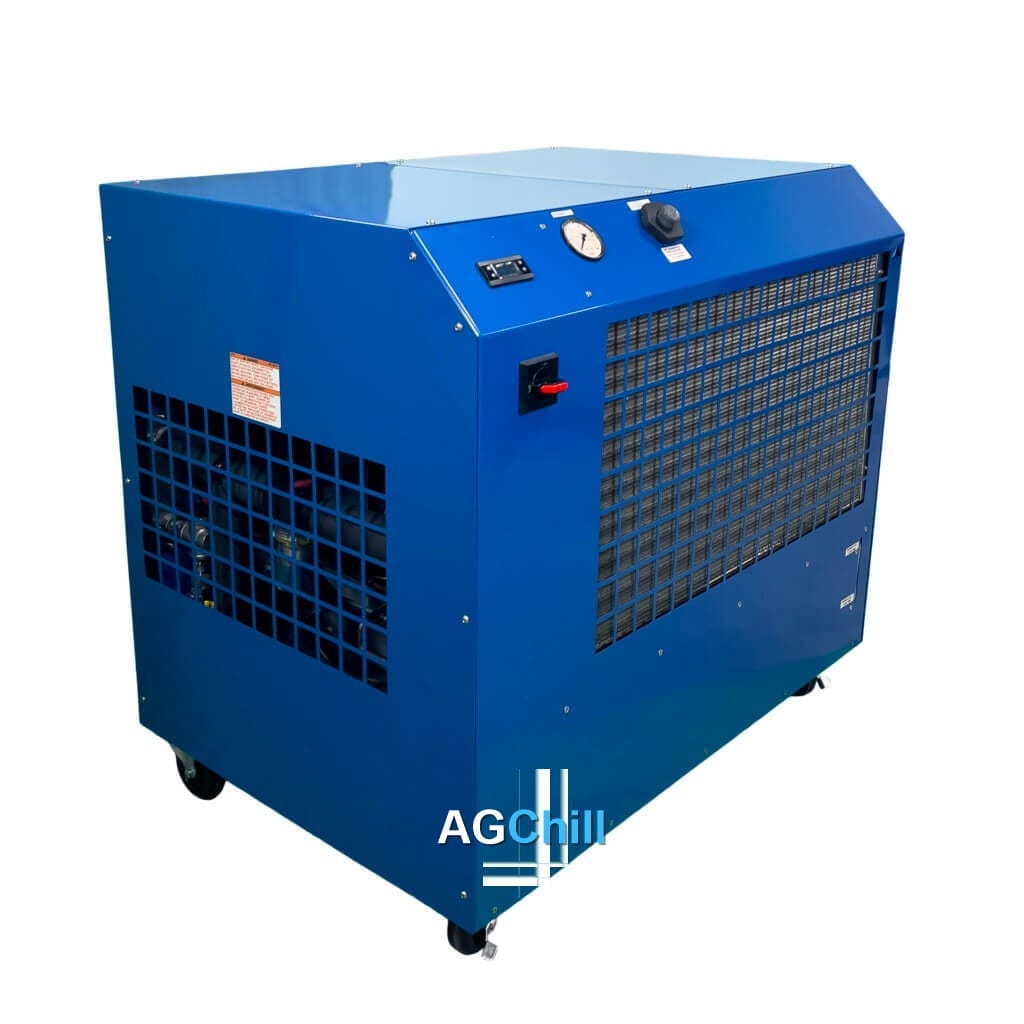
Why Chillers Matter

The Chiller's Role in Laser & Photonics Systems

A laser turns most of its input power into heat. The lasing medium, pump diodes, and optics all have to be held at a precise, stable temperature — typically around 18–25°C to within ±0.1–1°C — or the output wavelength drifts, power drops, and beam quality falls off. A recirculating process chiller is what holds that temperature, run after run.

At these tolerances the chiller is part of the optical system: a fraction of a degree of drift shows up directly as lost power, a misaligned beam, or — worst case — a cooked diode bar. Water quality and dew-point control matter just as much as raw capacity.

Process Cooling

The Cooling Challenge

Common process-cooling problems in laser and photonics systems — and why getting the chiller right protects the beam and the hardware.

Tight Temperature Stability (±0.1–1°C)

Laser output wavelength and power track coolant temperature. Fiber and diode-pumped systems often demand ±0.1–1°C around a fixed setpoint — far tighter than the ±3–5°C a generic industrial chiller holds. This needs proportional control, not simple on/off cycling.

Water Quality & Condensation

Many resonators require deionized or distilled water to protect optics and prevent scale and corrosion; the chiller must use compatible wetted materials and hold resistivity. Setpoints near or below dew point risk condensation on optics — controlled, above-dew-point operation is essential.

High Heat Flux & Diode Protection

High-power fiber and diode bars concentrate large heat loads in a tiny area; lose cooling for seconds and the diodes overheat and degrade. Pump-flow and temperature interlocks, plus reliable capacity with margin, keep the most expensive parts of the laser alive.

Where the Chiller Connects

Equipment We Cool in Laser & Photonics

Our chillers integrate directly with the laser and photonics equipment that this work relies on. These are the systems we most often cool — each with its own temperature target, flow, and failure mode we size for.

Fiber & CO₂ laser cutters/welders

The chiller holds the resonator, pump diodes, and optics at a stable setpoint so power and beam quality stay constant.

Medical & aesthetic lasers

The chiller keeps surgical, dermatology, and ophthalmic laser sources within a tight window for safe, repeatable dosing.

Laser marking, engraving & metal AM

The chiller cools galvo heads and laser sources in marking, engraving, and metal 3D-printing (LPBF) systems for consistent results.

Chiller Selection

Recommended Chillers

Chiller systems most commonly matched to laser and photonics applications.

Standard Series

Standard Series

68°F / 20°C

1/3-40 Ton

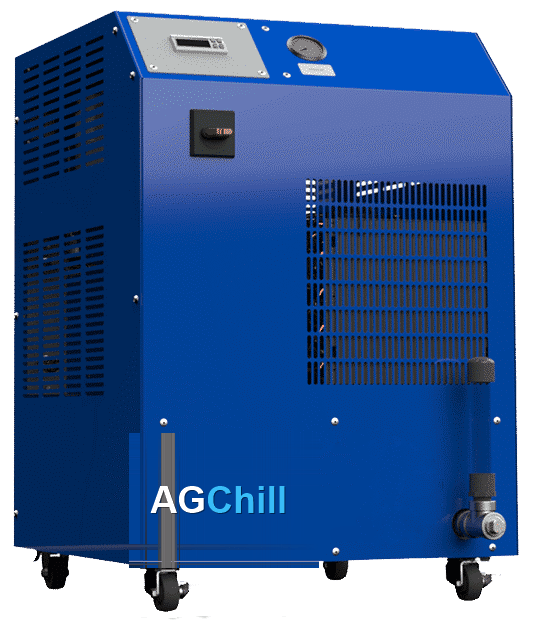
Precision, low-drift cooling at a fixed setpoint with DI-compatible wetted materials — the workhorse for fiber and CO₂ laser cutting, welding, and marking.

Get a Quote
Portable Chiller

Portable Chiller

64°F / 18°C

1-15 Ton

Dedicated point-of-use cooling for a single laser source or medical/aesthetic system, with fast response and tight temperature control.

Get a Quote
Central Chiller

Central Chiller

Multi-laser

5-50 Ton

Plant-wide cooling for shops running multiple laser cells from one loop, with the capacity margin and redundancy high-power sources demand.

Get a Quote
What's at Stake

What Happens When the Chiller Fails

When laser cooling drifts or drops, power falls, parts scrap, and the diodes are the first casualty.

Let laser coolant warm and output power sags and wavelength drifts — cut edges degrade, welds fail inspection, and marks become inconsistent, spiking scrap on production runs. Push it further and pump diodes and fiber overheat: a diode bar or fiber module can run into the thousands to tens of thousands of dollars to replace, and lead times take the machine offline for days to weeks. Condensation from an over-cold setpoint fogs or damages optics. The cooling loop is the cheapest insurance on the most expensive part of the laser.

±0.1–1°C

Stability high-power fiber and diode sources demand

Seconds

Loss of cooling that can degrade a diode bar

$1k–$10k+

To replace an overheated diode or fiber module

Who This Is For

We Work With All Stages of the Buying Process

Whether you're researching options or ready to order, AG Chill can help.

Researching Options

Process and manufacturing engineers at job shops, laser integrators, and photonics labs researching laser chiller precision, DI-water cooling, and how to protect diodes and optics.

Comparing Systems

Plant and lab managers evaluating a chiller replacement or retrofit — needs the stability spec, laser-OEM integration, DI compatibility, and parts availability.

Ready to Specify

Operations or engineering leads in the RFQ phase. Need setpoint/stability validation, proof of integration with a specific laser, commissioning, and reliable ongoing support.

Why AG Chill

How We Compare to the Alternatives

Laser cooling is split between pricey OEM-locked units and imprecise generic chillers. AG Chill balances precision, compatibility, and cost.

vs. Laser-OEM Chillers

Laser OEMs bundle validated chillers, but with proprietary design, premium spares, and dealer-only support. AG Chill wins the aftermarket, retrofits, and multi-brand shops that want independence.

vs. Precision Lab Chillers

Lab-grade recirculators offer excellent control but at a steep premium and small capacity — overkill and undersized for a production laser cell. AG Chill delivers precision at industrial capacity and cost.

vs. Generic Industrial Chillers

Generic units are cheaper but hold only ±3–5°C, lack DI-compatible wetted materials, and ignore dew point — risking optics and diodes. AG Chill's precision, laser-aware build is the difference.

vs. Used / Rebuilt Chillers

Second-hand laser chillers carry unknown history, DI-loop corrosion, and no warranty on the parts protecting a five- or six-figure laser. AG Chill's new-build reliability removes that risk.

Knowledge Base

Related Articles

Buying guides and technical resources for laser and photonics process cooling.

How to Size an Industrial Chiller

How to Size an Industrial Chiller

Heat load, flow rate, temperature differential, and ambient — how each one drives the size your laser actually needs.

Read the Guide ›
Chillers for Laser Cooling

Chillers for Laser Cooling

How coolant temperature, water quality, and stability protect the diodes, optics, and beam quality of a laser.

Read the Guide ›
Chillers for Metalworking and CNC Coolant

Metalworking & Tooling Chillers

Laser cutting overlaps precision metalworking — see how coolant temperature holds tolerance and tool life.

View Industry ›
Customer Results

Case Studies

Real-world results from laser and photonics customers.

Case Studies Coming Soon

We are actively documenting customer results from laser and photonics installations. These will be published here as case studies are completed. Have a project to discuss? We are happy to talk through your application.

Discuss Your Application
Get Started

Ready to Spec the Right Chiller?

Tell us your laser's cooling requirement — setpoint, stability, flow, and heat load. AG Chill will identify the right system for your laser or photonics application.

Start Chiller SelectorTalk to an Engineer
FAQ

Common Questions

Why do lasers need a chiller?

Laser resonators, diodes, and optics generate heat that must be removed to hold beam quality and protect the components; industrial lasers essentially always need a chiller.

What happens if laser cooling fails?

Beam quality and power drift, and the resonator or diodes can be damaged.