← All Industries
EV & Battery
EV & Battery Manufacturing Chillers
Precise, stable, sub-ambient-capable cooling for battery test chambers, cell cycling, formation, and electrode coating — where temperature is the test.
View Recommended Chillers
Precise, stable, sub-ambient-capable cooling for battery test chambers, cell cycling, formation, and electrode coating — where temperature is the test.
View Recommended ChillersIn battery manufacturing and test, temperature is the variable. Cell cyclers and test chambers run cells through precise thermal profiles — often from sub-zero cold-cranking conditions up through hot-soak — and the coolant loop is what makes those setpoints real and repeatable. Formation and aging, electrode coating and drying, and dry-room support all depend on tightly controlled process cooling; test data is only valid if the temperature was actually held.
And because cells store a lot of energy, cooling is also a safety layer: stable, reliable heat removal keeps test stands and process equipment inside their limits and away from thermal runaway.
Common process-cooling problems in EV and battery work — and why getting the chiller right protects the data and the cells.
Cycling and formation are only valid if the temperature holds. Test protocols demand tight stability at a fixed setpoint — drift shows up directly as scattered, unrepeatable data and out-of-spec formation.
Cold-weather and cold-cranking validation drives coolant well below ambient — commonly to −30°C to −40°C. That's low-temp (LT/ELT) territory, not a comfort-cooling chiller.
Cells hold real energy, and long formation and cycling runs go unattended for hours. Dependable, margin-sized cooling with interlocks keeps stands within limits and away from thermal runaway.
Our chillers integrate directly with the manufacturing and test equipment this work relies on. These are the systems we most often cool — each with its own temperature target, range, and failure mode we size for.
The chiller drives the coolant loop that holds cells and packs at each test setpoint through the cycle.
The chiller provides the cold side for thermal cycling and shock chambers used in validation.
The chiller holds process temperature on coating/drying lines and formation and aging equipment.
Chiller systems most commonly matched to EV and battery applications.
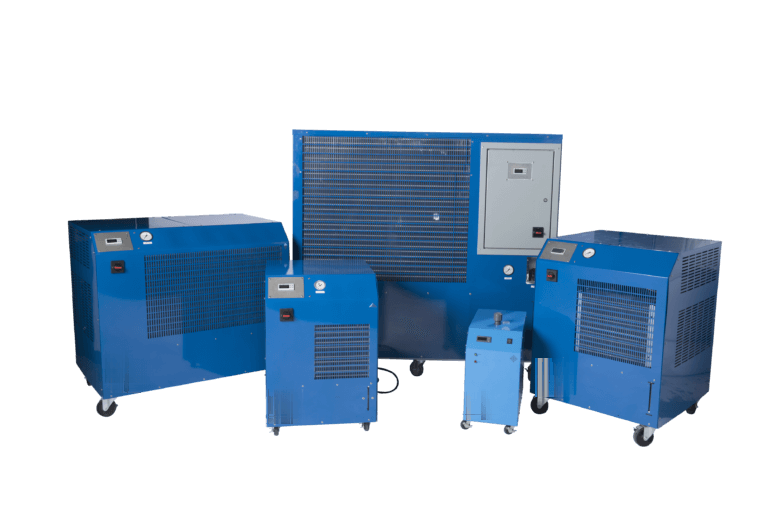
Standard Series
50°F / 10°C
1/3-40 Ton
Stable, precise cooling for cyclers, coating and drying lines, and formation — a fixed setpoint held tightly enough to trust the data.
Get a Quote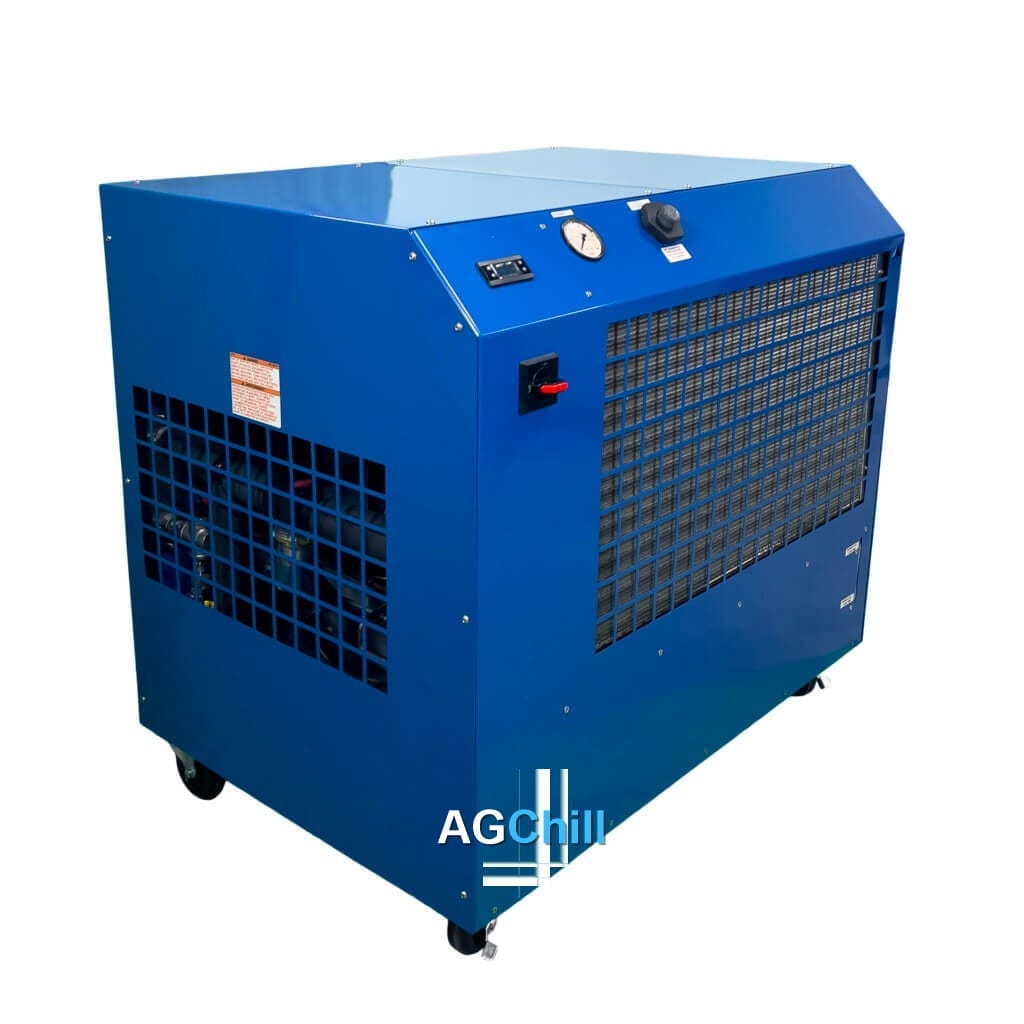
LT / ELT Series
−22°F / −30°C
½ ~ 30 Ton
Low and extra-low temperature cooling for cold-weather and cold-cranking battery test to −30°C and below.
Get a Quote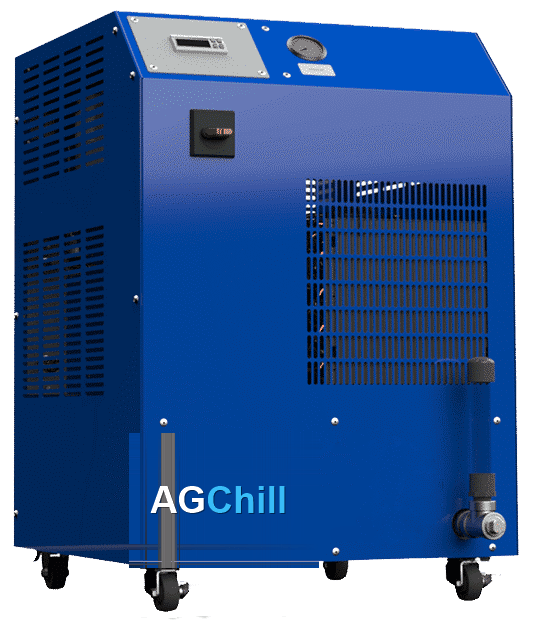
Central Chiller
Lab-wide
5-50 Ton
Plant- or lab-wide cooling for banks of test stands and process equipment on one loop, with the capacity margin long runs need.
Get a QuoteWhen the coolant drifts, the test data is invalid and the run is scrapped — and at worst, cells go unsafe.
If cooling drifts mid-test, the temperature the data assumes was never real — a multi-week cycling or formation run is invalidated and has to be repeated, burning cells, chambers, and schedule on a program that's already racing. Coating and drying lines drift out of spec and scrap electrode. And because cells store real energy, losing cooling on a loaded stand is a safety event, not just a data one — the reason interlocks and margin-sized capacity matter. Reliable cooling protects the data, the throughput, and the lab.
−30°C+
Cold-test setpoints validation reaches
Weeks
A cycling run lost when cooling drifts
Safety
What's on the line on a loaded stand
Whether you're researching options or ready to order, AG Chill can help.
Test and process engineers at battery makers, EV OEMs, and cell labs researching test-chamber chillers, sub-ambient cooling, and stability for valid data.
Lab and facility managers evaluating chillers — needs the stability spec, low-temp range, redundancy for long runs, and integration with test equipment.
Engineering or program leads in the RFQ phase. Need setpoint/stability validation, low-temp capacity, and reliable support for a growing test program.
Battery-lab cooling is split between pricey test-system OEMs and generic units that can't hold the spec. AG Chill balances precision, low-temp range, and cost.
Test-equipment OEMs bundle chillers with proprietary design and premium spares. AG Chill wins standalone test stands and labs that want independent, serviceable cooling.
Lab recirculators offer fine control but small capacity at a premium — undersized for a bank of stands. AG Chill delivers the stability at industrial capacity and cost.
Generic units are cheaper but can't reach sub-ambient test setpoints or hold tight stability — invalidating data. AG Chill's low-temp, precise build is the difference.
Second-hand units carry unknown history and no warranty on the cooling a multi-week run and expensive cells depend on. AG Chill's new-build reliability removes that risk.
Buying guides and technical resources for EV and battery process cooling.
Sizing Guide
Heat load, flow rate, temperature differential, and ambient — how each one drives the size your test loop needs.
Read the Guide ›
Energy Guide
Sub-ambient cold-test range, stability for valid data, and redundancy for long formation and cycling runs.
Read the Guide ›
Cooling Guide
How process cooling supports battery, energy-storage, and clean-energy manufacturing and test.
Read the Guide ›Real-world results from EV and battery customers.
We are actively documenting customer results from EV and battery installations. These will be published here as case studies are completed. Have a project to discuss? We are happy to talk through your application.
Discuss Your ApplicationTell us your test setpoints, low-temp range, and stand count. AG Chill will identify the right system for your EV or battery application.
For sub-ambient cooling of battery test chambers, cell cycling and formation, and electrode-coating processes that need tight temperature control.
Test data is invalidated and cells can overheat during cycling — a safety and quality risk.